
Content topics

Quality & Safety

Nursing
Podcast- Care, code and cost [published]
Blog - The art of caring: Beyond Clinical Competence - Post 1 [published]

Technology

Culture & values
Coming soon …

Life at Novacare
Coming soon …

Architecture, Engineering & Construction
Video - Building Pakistan’s leading hospital [published]
Podcast - Building a hospital is unlike building anything else [published]

Medical Equipment & Engineering
Coming soon …

Life back in Pakistan for Wapistanis

Clinical innovation
Coming soon …
Research & trials
Coming soon …

Reflections on quality
A personal blog of the Novacare Hospital CEO
Post 1 of 3 in this series - Published, October 22, 2025


LISTEN TO THIS ARTICLE THROUGH THE AUDIO PLAYERSince June 2024, I have been working with Novacare Hospital Islamabad. My decision to join was inspired by the vision of the hospital’s founders and funders, who are determined to create something truly unique in Pakistan’s healthcare landscape. Having worked in Pakistan previously, I developed a deep appreciation for the country. Despite its challenges, Pakistan has immense potential—in its people, in its resilience, and in its resources.
At Novacare, the objective is not only to establish a state-of-the-art hospital equipped with advanced technology and a patient-centered design. The ambition is much broader: to transform private healthcare in Pakistan and set new benchmarks for service delivery. Our aspiration is clear - we want to become one of the best in Pakistan.
In the coming series of reflections, we will explore the concept of quality of care as envisioned at Novacare. We will define what quality means in-depth, and how we intend to design, develop, and embed these principles into every aspect of our practice.


In Pakistan, the public in general views hospitals with a sense of skepticism and concern. Many individuals feel that hospitals—whether private, government-run, or charitable—lack transparency in their operations. From the perspective of patients and families, hospitals can often appear inaccessible and unapproachable institutions. Community members frequently raise questions such as: Do hospitals genuinely understand and respond to patients’ suffering? Are services affordable and equitable? How effectively are infection control measures implemented? Are financial considerations overshadowing patient care? Is care being delivered in a personalized and compassionate manner? Why are waiting areas overcrowded? Are patients being treated with dignity and respect, or simply as numbers? Why do they not explain what medication I have to take and why? These are the issues and concerns that patients commonly express when discussing their experiences and expectations of healthcare institutions.
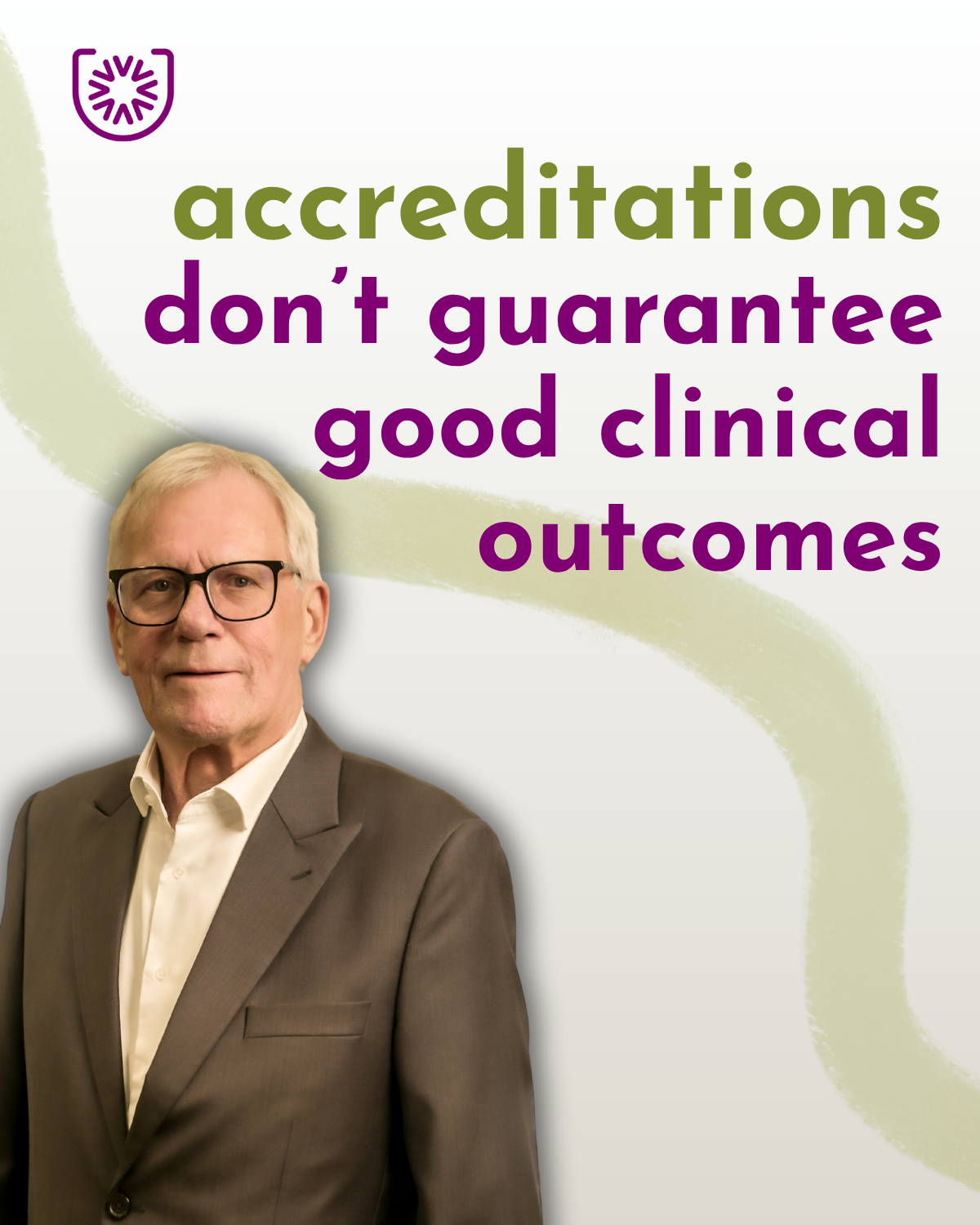
In Pakistan there is a common understanding that hospitals which are accredited by an international body deliver good quality. Unfortunately only a handful of hospitals carry a seal of approval by such an international body, whereas for example in the UAE such a seal is mandatory to maintain the license to operate. Also, in India, most larger private hospitals carry such a seal as a proof of quality.
Naturally, Novacare will pursue Joint Commission International (JCI) and College of American Pathologists (CAP) accreditation[1]. These accreditations will validate our adherence to internationally recognized standards: from facility management and patient-centered practices to medication safety and compliance with the International Patient Safety Goals (IPSG). JCI, for example, measures conformity with over 1,300 standards, while CAP applies a similar framework to ensure the quality and reliability of laboratory services.
But does accreditation alone prove quality of care? The honest answer is: not entirely. Accreditation demonstrates that we comply with established standards, but it does not, by itself, provide a full picture of clinical outcomes. To truly measure how good our care is, we will need to engage in ongoing research, data collection, and performance measurement at the individual clinical level. This is a complex and demanding task, and we will explore these challenges in detail in future contributions.
Before delving deeper into the technical aspects of quality, however, I want to share a fundamental insight that has taken me 25 years in hospital practice to fully understand. It is the foundation upon which all quality of care must be built:
Every person—whether sick or healthy—who walks through the doors of a hospital carries fear. Fear that a disease, an injury, or a failing organ may require treatment, a procedure, or surgery. Fear that their life, or the life of a loved one, may be disrupted. This human emotion—this vulnerability—is at the core of the hospital experience.
Recognizing and responding to that fear with empathy, compassion, and respect is the true starting point of quality of care. Every other element of quality builds upon this foundation. Whether we are physicians, nurses, housekeepers, receptionists, or managers, our shared responsibility is to acknowledge that fear and alleviate it through our words, our actions, and our presence.
At Novacare, this is the essence of quality of care. We embrace the famous quote of Donabedian (1919-2000) who is one of the great thinkers about quality: “The secret of quality is love”.
Hans Kedzierski, CEO
[1] These accreditations are like a diploma, certifying that the hospital meets a lot of standards that are internationally agreed. The diploma is awarded after a thorough weeklong inspection visit by a team of international experts.
“The secret of quality is love”
Perspectives on quality in healthcare: The product dimension
A personal blog of the Novacare Hospital CEO
Post 2 of 3 in this series - Published, January 14, 2026
LISTEN TO THIS ARTICLE THROUGH THE AUDIO PLAYERQuality is an inherently multidimensional concept, shaped by the lens through which it is examined. In healthcare, debates about quality are particularly complex, as they must integrate perspectives of patients, professionals, institutions, and society. The systematic and scientific study of quality began in the early 20th century, influenced strongly by the industrial revolution and the emergence of mass production. Thinkers such as Joseph Juran, W. Edwards Deming, and later Avedis Donabedian occasionally transferred principles of quality control and systems thinking from manufacturing into healthcare.
Juran’s seminal definition—“quality is fitness for use”—provides a useful starting point. This definition emphasizes that the quality of a product or service is not absolute but contextual, determined by the ability of that product or service to meet the needs and expectations of its intended users. However, for practical application in the healthcare setting, such broad definitions require further refinement.
The four Perspectives on Quality
Scholars and practitioners (and we at Novacare) commonly distinguish four major perspectives through which quality can be conceptualized:
The product or service itself
The customer (in healthcare: the patient and family)
The producer (in healthcare: caregivers, doctors, nurses, allied professionals)
The value perspective (quality relative to cost and outcomes)
Each perspective provides a complementary but distinct framework for understanding, creating and evaluating quality. In this contribution, the focus will be on the product (or service) perspective.
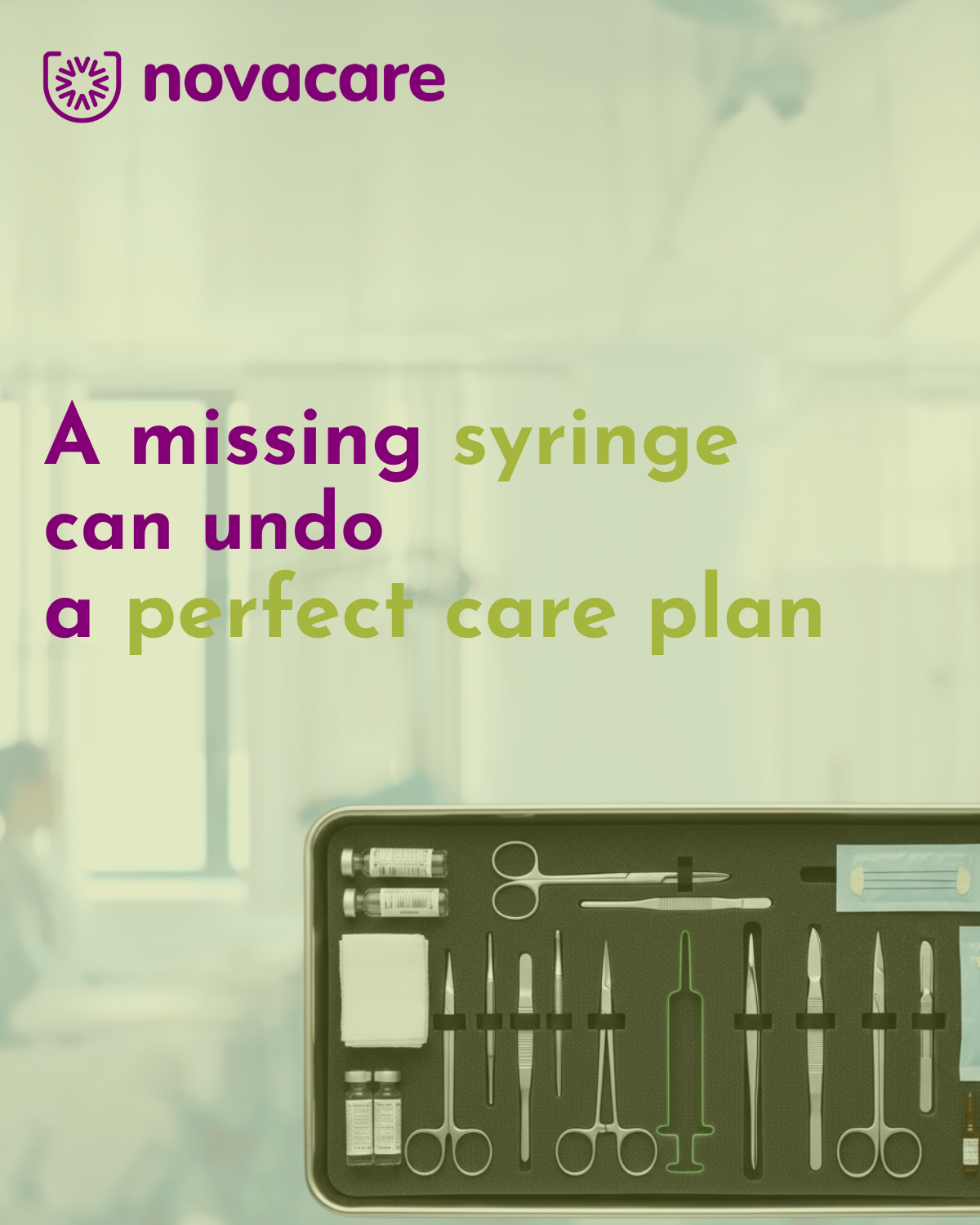
The Product (or Service) Perspective
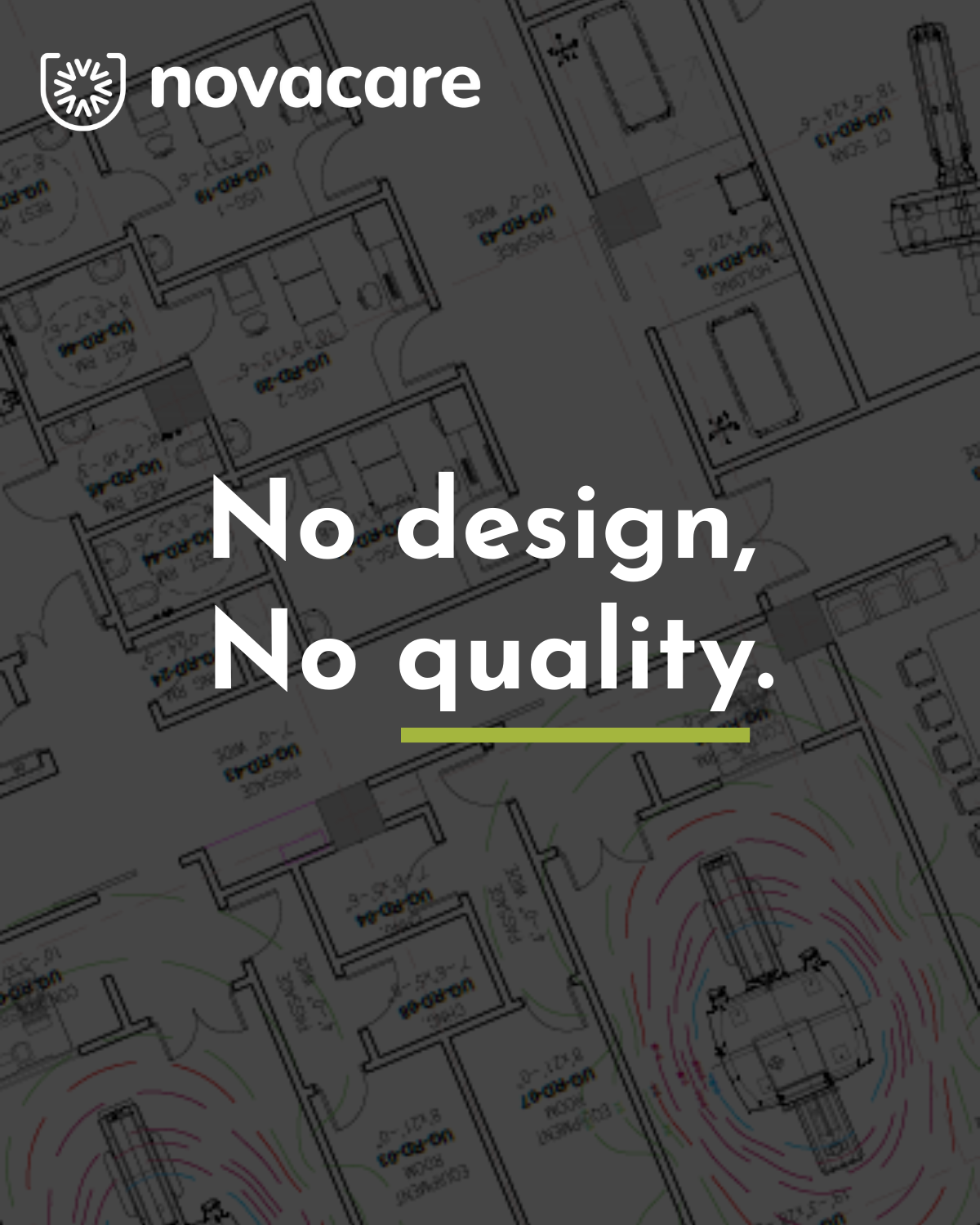
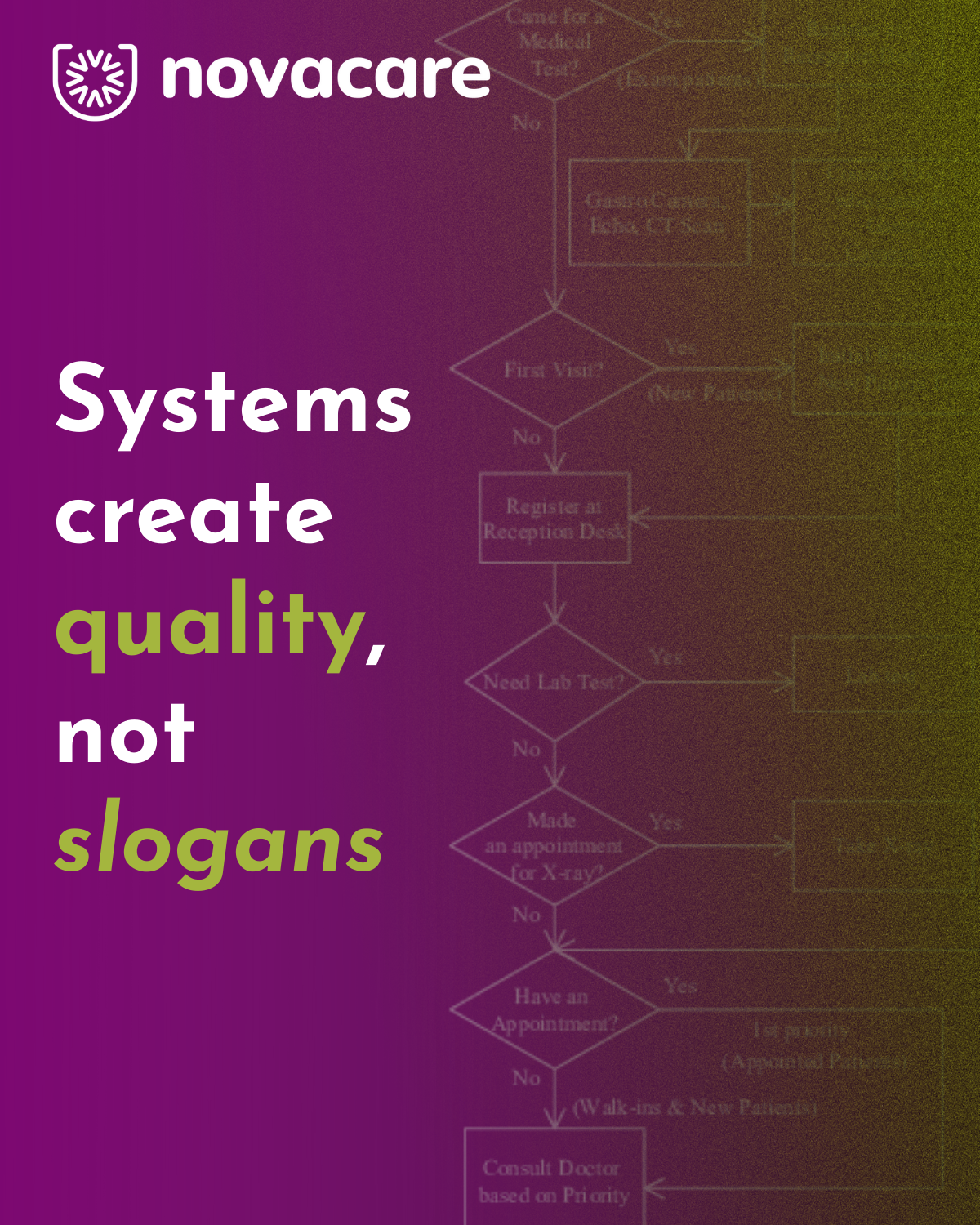
The product perspective considers quality in terms of the inherent characteristics of the service or intervention being delivered. Quality is judged according to the degree to which predefined features are present, reliable, and measurable. Within healthcare, this perspective emphasizes the design and delivery of clinical and support services as if they were “products” requiring standards of specification, reproducibility, and evaluation.
From a systems standpoint, product quality is best understood as a continuum involving four interrelated stages:
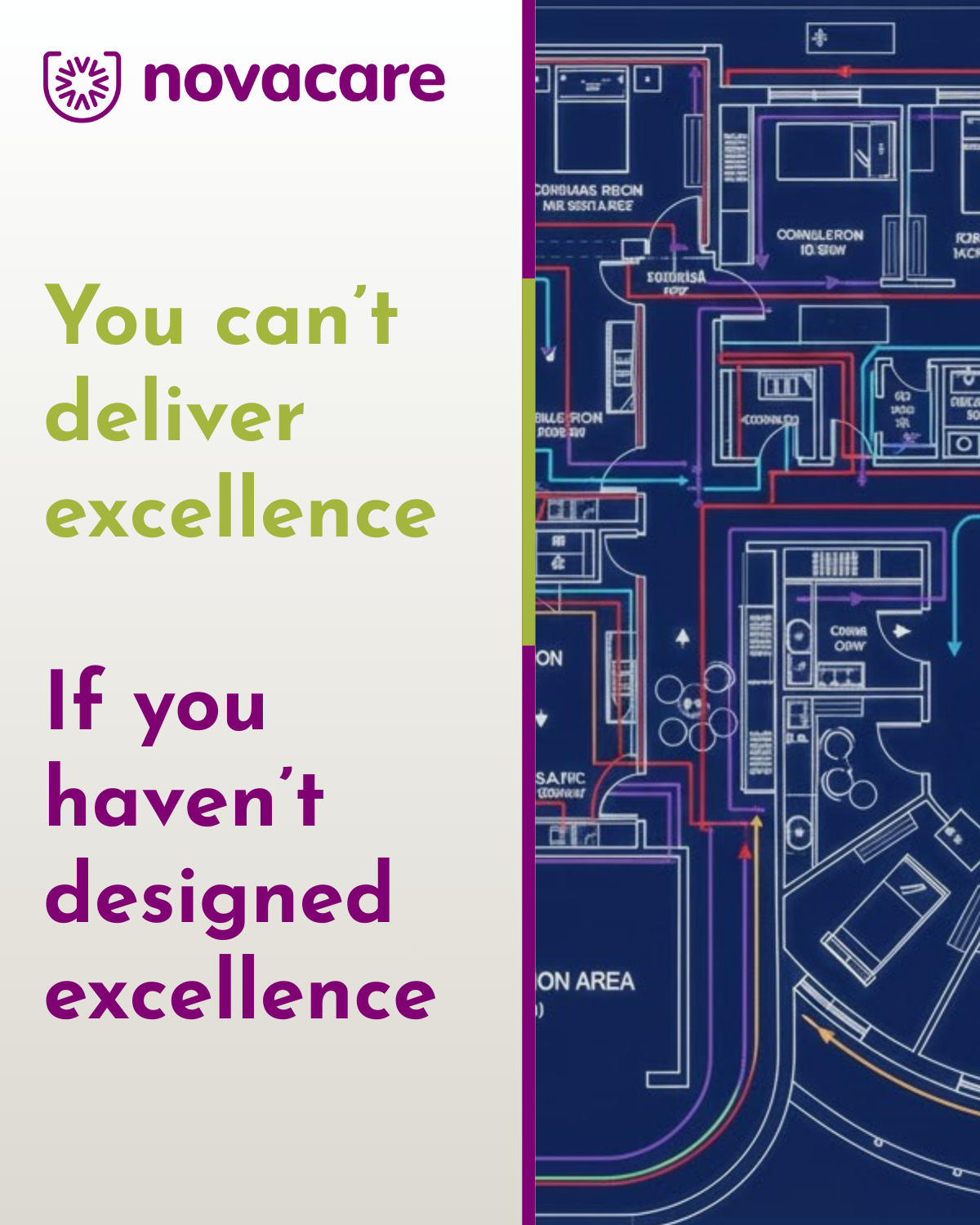
Design – the conceptualization of the service or care plan, based on scientific evidence, clinical guidelines, and individualized patient assessment.
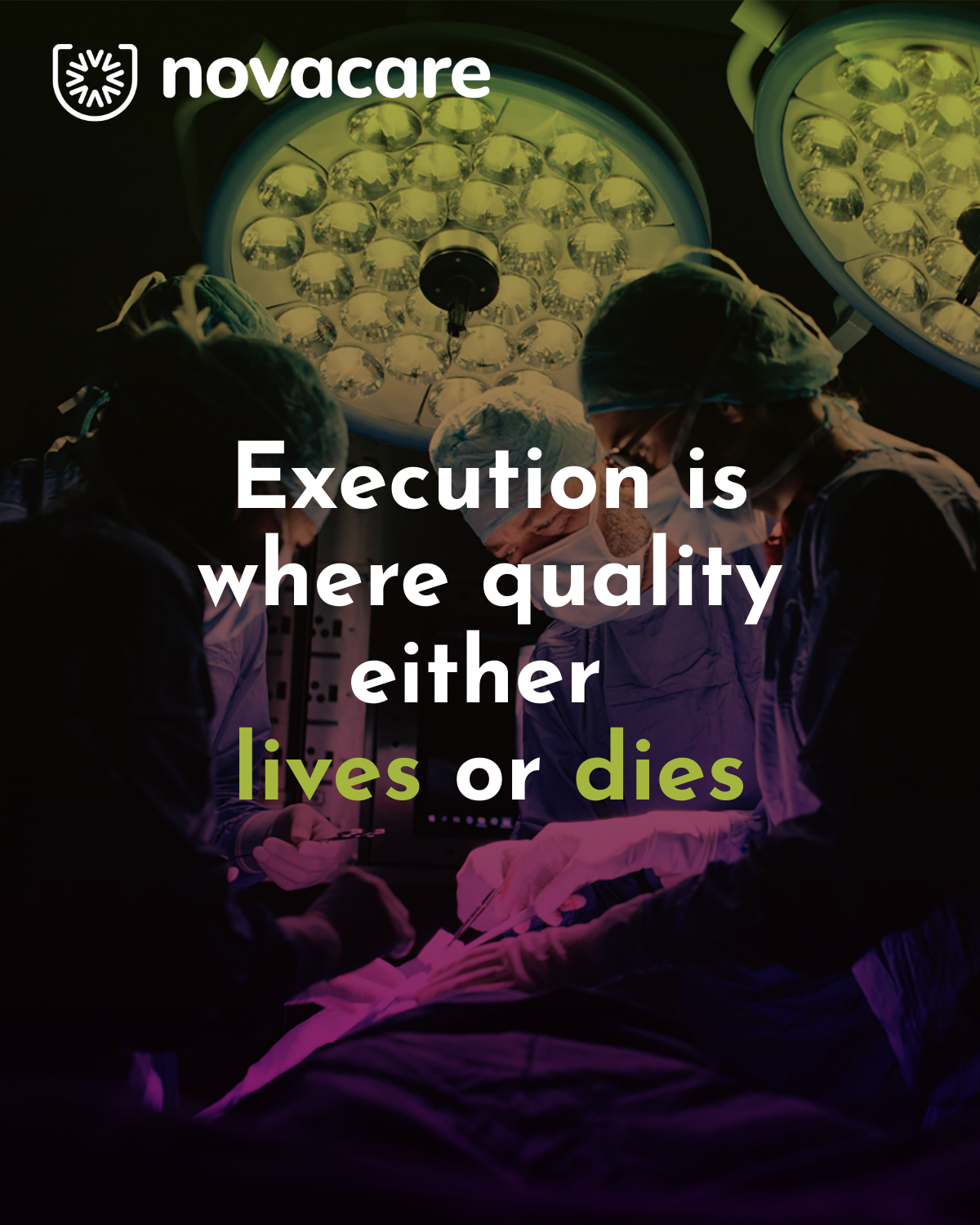
Execution – the fidelity with which the plan is carried out in practice.
Distribution – the availability and accessibility of necessary inputs (e.g., clinical consumables, medications, technology).
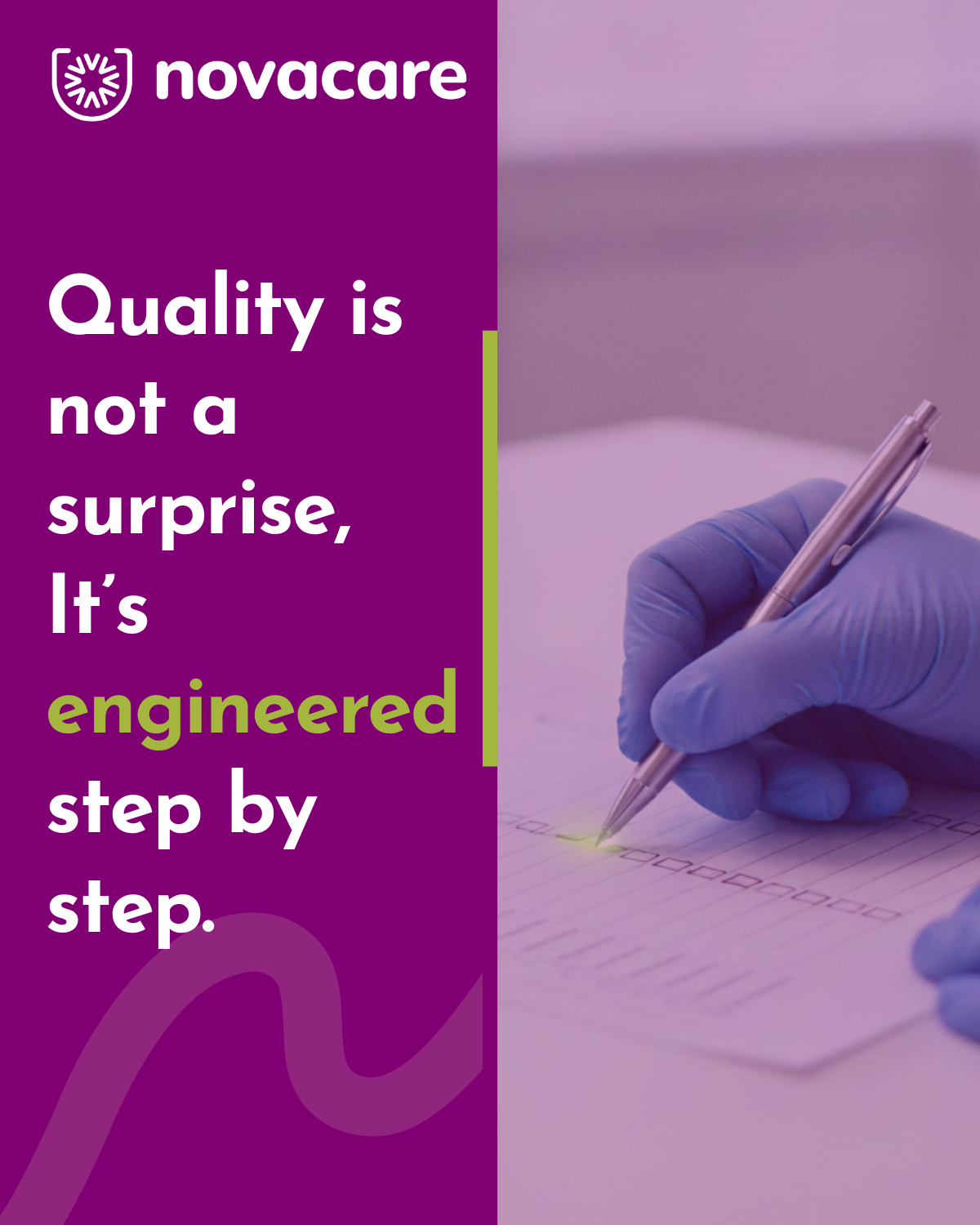
Evaluation and Iteration (aftercare) – continuous monitoring, identification of errors or omissions, and real-time adaptation to evolving patient needs.
As an example: a Care Plan
To illustrate, consider the creation and implementation of a care plan in a hospital setting.
Design: The clinician (nurse or physician) develops the plan following a comprehensive assessment of the patient’s clinical condition. A well-structured, detailed and evidence based care plan reduces ambiguity, supports consistent implementation, and facilitates continuity across shifts.
Execution: Once designed, the plan must be enacted accurately and consistently. High-quality execution minimizes omissions and ensures interventions are performed in accordance with best practice.
Distribution: Adequate provision of consumables—bandages, catheters, syringes, and similar resources—is essential. Delays in access to supplies not only undermine workflow efficiency but can also directly compromise patient safety and outcomes.
Evaluation and Iteration: Ongoing evaluation is crucial. This includes both retrospective quality assurance (identifying errors or gaps) and prospective adaptation, such as revising the care plan in response to changes in the patient’s clinical trajectory. In this sense, evaluation functions as the healthcare analogue of “after-sales service” in manufacturing.
Implications
The product perspective underscores the necessity for robust systems that support each stage of the cycle. The hospitals must therefore:
Invest in design capacity, drawing on clinical expertise, evidence-based guidelines, and decision-support tools.
Support high-fidelity execution through staff training, workload management, and process standardization.
Ensure resilient supply chains, enabling frontline staff to access necessary materials at the point of care.
Institutionalize evaluation and feedback loops, using audits, morbidity and mortality reviews, and quality improvement cycles to identify opportunities for improvement.
Given the scale of our tertiary Novacare hospital, where hundreds of treatment and care plans are simultaneously in operation, the product perspective highlights the importance of coordination, standardization, and continual learning. By the way: EMR support is indispensible for a consistent way of working. We will write a separate blog on the hospital IT topic.
At Novacare, this approach forms one of the foundational pillars of our quality philosophy. The design of care pathways benefits from both the expertise of our local clinicians and nurses and from international partnerships, such as with Imperial College Healthcare Trust in London (UK), which provide access to cutting-edge knowledge and quality improvement practices.
Conclusion
The product perspective offers a systematic framework for conceptualizing and evaluating quality in healthcare. By focusing on design, execution, distribution, and evaluation, it translates abstract notions of “fitness for use” into tangible, measurable dimensions of clinical service delivery. Yet, this is only one dimension of quality. Equally critical are the perspectives of patients, caregivers, and value—each providing additional insight into how healthcare quality should be defined, delivered, and assessed.
My next contribution will examine the patient perspective, highlighting how quality is experienced and judged by those at the center of healthcare delivery.
Hans Kedzierski, CEO
Podcast on Technology
Building the digital hospital of the future
Zahid Ali, Mustafa Hassan & Ghalib Hafiz
Published January 26, 2026
SUMMARY
Novacare’s inaugural podcast pulls back the curtain on a bold idea: what if healthcare technology didn’t burden clinicians—but quietly empowered them? In a candid, wide-ranging conversation, Ghalib Hafiz, Mustafa Hassan, and Zahid Ali unpack how Novacare is reimagining healthcare in Pakistan from the ground up—placing clinicians and patients at the center, and designing technology to work like “magic” in the background. Not flashy. Not gimmicky. Just seamless, human-first care that restores time, trust, and focus where it matters most.
From AI-assisted clinical decision support and ambient listening to radically reducing waiting times and medical errors, the discussion brings real, tangible examples to life. The speakers tackle hard truths—clinician burnout, fragmented systems, waste, and care avoidance—and explain why now is different. With mature interoperability standards, cloud and AI readiness, and a greenfield opportunity, Novacare is aiming for global benchmarks like HIMSS EMRAM Stage 7, not as a tech flex, but as proof of disciplined processes, governance, and safer outcomes.
But this episode is about more than technology. It’s about building a once-in-a-generation Pakistani institution. A place where innovation is encouraged, frontline teams help design solutions, and talented professionals—many returning home—can do the most meaningful work of their careers. The message is clear: Novacare isn’t just opening a hospital. It’s building a movement. And if you’ve ever wanted to be part of something that could change healthcare in Pakistan, this conversation is your invitation.
FULL TRANSCRIPT
GHALIB HAFIZ
We have started a series of podcasts that are meant to be an inspiring conversation about what we're building at Novacare. Today's topic is on technology. It's about demystifying a little bit how we're thinking about technology differently. And what it means for our clinicians, our patients, and the broader ecosystem.
The purpose of this podcast series is to cover different topics such as technology quality and safety, nursing, our culture and values. We'll go into the site and also obviously cover design, engineering, and architecture. And we believe that this is one of the most exciting things that is happening in healthcare in Pakistan. We want to radiate some of this excitement to some of our listeners and, in the process, hopefully create a bit of FOMO. Fear of missing out. and invite some of the folks that are out there to become part of our journey, become part of our story.
Before we start, this is not the easiest of media to produce. In fact, in terms of effort to reward ratio, this is probably one of the hardest things that we could be doing. So a big shout out to our colleagues who helped set this up and prepare this, especially Sikandar Hayat, who's behind the camera right now. Among his five other responsibilities at Novacare, he also manages a lot of our digital and social media magic. We are ever grateful to Sikander for helping us set this up and especially for the big, heavy lift that is required in post-production. Now let's jump into it.
Normally, at least I find it awkward to introduce myself. So what I suggest is that we introduce the person to the right. So I will introduce Mustafa, Mustafa introduce Zahid Saab and vice versa. So let me start by introducing Mustafa.
Mustafa is a Wapistani. He spent almost 15–20 years in the U. S. in healthcare and in healthcare technology. Specifically, he puts the 'epic' in 'epic' … so before 'epic' became 'epic', Mustafa was part of 'epic' and was also involved in healthcare technology consulting at Nordic Health and KPMG. And most recently at CVS Health after their acquisition of Aetna. Designing value-based care programs after that acquisition. Two and a half years ago, he made the decision to return to Pakistan and was with the Agha Khan University Hospital in Karachi.
And we're very fortunate that we were somehow able to inspire him and convince him to join us here. Mustafa has been instrumental in setting up our technology team and our technology function, and continues to lead and drive the vision that we are building here.
MUSTAFA HASSAN
Thank you. It's great to be here and excited for our inaugural podcast.
GHALIB HAFIZ
Yeah. You want to go ahead and introduce Zahid
MUSTAFA HASSAN
All right. Zahid is... A person that's difficult to introduce. I mean, he is a renaissance man. He is, a technology extraordinaire. brings an incredible amount of very, very deep healthcare experience, but not just from a technology perspective. How hospitals tick— he knows how hospitals work, how do you put people, systems, and processes together, and an ability, sort of, that's one of the most remarkable abilities I've seen for somebody … who can be extremely aspirational and think of big, bold, wild, and sometimes crazy ideas, but with an incredible focus on the day-to-day execution, down to the minutiae level of detail.
And, you know, we've been on this journey together for well over a year now. It's been a lot of fun. We've had a lot of fun. We've traveled to quite a few places together. Zahids been a keynote speaker at... very substantial, significant conferences. He's an active member of HIMSS, which is the global healthcare technology body. He's written... guidelines on interoperability. He's … published work on, how new care models are defining in new ways of care delivery. So, … but formally he works as our CIO. So it's been a lot of fun working with Zahid and I'm really excited about our journey ahead.
ZAHID ALI
Yeah, thanks for the introduction and having me over here. So one of the exciting parts in this entire journey, I just had made a LinkedIn announcement yesterday, and got a lot of messages from the people who wanted to work, who want to help Novacare. So that's an exciting part.
Now I've moved to an introduction. With the other way, so I used to say him “bhai” because this is how we have built a relationship. That's really like a brother, actually. Uh, so roughly one and a half year ago, we met together at a coffee shop. And we had a bit of a small conversation. I thought that I would never work in a corporate environment again, for many many reasons, especially in Pakistan … [but] when I met with these guys, Mustafa and Faraz, that took me a lot of interest.
And, uh... Within all this journey of one and a half year, So I always used to say, if you need to see a crazy person, who is always up to work, doing a lot of stuff, very detailed oriented, so you can meet Ghalib bhai. So, and his ex-McKinsey … spent a lot of time in healthcare …. doing the transaction structuring, optimizations, and few mergers and acquisitions so he brings that kind of knowledge that really uplifts the institution … the best part that I have seen about him ... He involves in too much detail. He studies. He finds the best. outcomes of any process and even to me, who understands technology very briefly, alot of learning, a lot of aspirations I gained from Ghalib. So this is Ghalib.
GHALIB HAFIZ
All right, thank you. Uh, thank you guys. That was … heartwarming, very wholesome.
Okay, let me start by framing the first question a bit provocatively. Which is, we know the health system in Pakistan. There is no healthcare documentation. For obvious reasons. We all understand the reasons. People don't like to document. In systems where there is documentation. Technology is the number one driver of burnout. So these systems that are out there are literally driving all the clinicians crazy. And it seems paradoxical that we would build a system— with so much technology in it that is both, what nobody else is doing. And actually, potentially, an HR issue. So, what are we doing? Seems paradoxical. Why are we making such a big strategic mistake?
MUSTAFA HASSAN
Look, there's a lot to unpack here.
I think... The issue around documentation and people not documenting— I think it's not just pervasive in healthcare. I think it's generally pervasive across the board. Healthcare happens to be one of those industries in Pakistan that is relatively nascent, at least in the private sector, and you see the same kinds of negative behaviors manifesting. themselves here. But yeah, you're very right to say that, even in much more advanced economies where substantial investment in healthcare technology has gone into healthcare systems, that has often produced a substantial amount of clinician burnout. And I think there's been a lot of chatter around it. Which... Rightly raises the question of, you know, why are we so gung-ho about technology.
I think one of the things to realize right is that technology has advanced incredibly fast in healthcare over the last decade or so, and one of the biggest areas of advancements that's happened is the ability—uh, standards around which you can exchange data so that even if you have multiple systems in place, one is taking your registration data, one is taking your clinical data, another one is taking your financial data, to be able to connect those systems together and make them work seamlessly, often in the background, in the context of a you know administrative workflow or a clinical workflow. Has become a lot easier to do now, but you need to be able to think about all of these things up front and how the various puzzle pieces are going to fit together.
To make healthcare seamless. So, but if you are able to do that, what you unlock is something that is just magical, right? Like it should work like magic. You know, you're an overwhelmed clinician going through their day. Technology will quietly in the background just make sure that you get the right information at the right time to be able to make sound decisions. About a patient or even as a patient when you're walking into a healthcare facility, technology, if done right, can really simplify your experience and provide you transparency and visibility into what to expect. And it's not about having flashy screens or fancy gadgets or technical-looking devices. I think the best-done technology just works seamlessly in the background without you even realizing it.
And that's why I use the word 'magic,' because you don't know what's going on. And if we do technology right... We will build an institution where everything just seems to connect harmoniously together and takes a lot of the friction out of the process so that our clinicians are focused on providing the care and our patients are focused on receiving the care for themselves and their loved ones. So that's what makes me excited about this journey, and I think that's really central to... our strategic investments in technology that we've done.
ZAHID ALI
Yep. So basically, I agree to what Mustafa has alluded to. So.... We need to compare healthcare industry with the rest of the industries. Thank you…. so maybe we take example of a airline industry we take an example of production industry.
The one complex part in healthcare, it has so many facets, so many areas of work. That the complexity is huge. But over the years, healthcare has not really transformed. Like, we keep on... building new things, putting more pressure on the people, especially the providers, the clinicians, the nurses, that you have to do this. If something is not happening in terms of the quality, in terms of the outcome, we always put more pressure on the providers. So that's a kind of a negative aura that has been set in place for the last many, many years. So what opportunity this, obviously with Novacare, it brings, we are a green field. We can get out of that stereotypes. We can build a better experience. This is what we are trying to do.
This is the investment we are making. Not a very stereotype, maybe a kind of EHR system where even to record one patient's proper documentation on all those different standards. You need 15 to 20 minutes so if we are taking 15 to 20 minutes of one episode of patient-doctor interaction just putting the data into the system. So then the patient care is something that would be missing in the entire journey. So that's, I always used to say, Healthcare is relational. So it's not a transactional. So, the transaction is a byproduct. You need to build a relation between the provider and the patient, even the care facility and the patient. So, that's something that we are thinking through. And how we have to provide them the right kind of navigation, the right kind of experience coming to the hospital.
In the hospital and after the hospital. So, roughly, like in the lifespan of a person. So, about 70% of their time into the entire lifetime journey is spent in the outpatient setting. 30% is spent in the inpatient setting. So, if we just take like rough numbers from different studies or the data published. Coming into the health care facility and going out of the health care facility, check-in to check-out time is usually three to four hours. So in this era, ... especially the busy professionals. like executives and even ordinary people. The life has changed totally. So, nobody wants to wait into the healthcare. If you go to the hotel, so they wanted to use customers to use the table till the time they are eating, they are using it.
They don't want you to sit over there for a long time, except the coffee shops. So. You see, in healthcare, it's reverse in a way. A lot of people are sitting, maybe four hours if one person is sitting over there. So we can calculate how much facility is used, how much facility is occupied. This is why the hospitals are known to be upgrading machines. That's something that we are trying to break. And we would build an experience, we would build that experience with the patient, with the help of the patient, with the help of the providers. So we are building a true quad-helix model. Where we are involving the innovators, where we are involving the providers, where we are involving the patients, and where we are involving our tech teams.
So that's a kind of, I would say, a recipe that we are building and all this investment. Would bring benefits to the community at large.
GHALIB HAFIZ
All right. No, I just want to add strategically, right? What we also see in Pakistan is this care avoidant behavior. Because the healthcare service the product hasn't matured. And that has a huge cost in terms of deferred healthcare. In terms of what happens when the case actually presents itself. To a health facility, the level of acuity, the level of complexity. Just grows significantly more than it should. Let me frame my next question, which is, we've built hospitals or looked at greenfield facilities like this. What's different now? And maybe I'll start with you. Versus just from five to seven years ago? What's fundamentally changed— just in the last five to seven years?
ZAHID ALI
So basically, in the last five to seven years, one of the revolutions I would say that's coming very strongly is the patient involvement. So over the past maybe 15, 20 years, we never thought about the patient. Right now, we are thinking about the patient. That's a revolution that's there. We also started thinking about the providers. Like are in burnout. … is it something they can make it easier? And when we start raising that question at the same time, there was technology. That is the AI. So now AI is playing a big role. The healthcare industry is typically considered 20 years behind. Other industries, in terms of the transformation, innovations. So that 20 years journey. Would be covered pretty much with AI. Especially, like, it's uh, many many publications are there. Ninety plus seven percent of healthcare data is never used for any secondary purpose. So one patient's data is another patient's medication. So, if you use it rightly with the help of AI, so we can build that kind of mechanism where actually the care delivery even within this brick and mortar setups and out of the brick and mortar setups. at their homes at their workplaces can be delivered it's like a really a connected care right now people are talking about how to establish that connected care model. It does not require the patient necessarily to come to the hospital. So where they are, they are engaged with their providers. So that's a kind of thinking that is evolving. And for us, that is one of the key driver to put into our design thinking.
GHALIB HAFIZ
Yeah, I mean, I would... Add to that and... You know, the last major hospital that I was involved in was 2019 Vintage. and, obviously, this whole user centricity has been around now for two decades. but, when we built the 2019 vintage, technology was very hard. You only got vended solutions. Those vended solutions were expensive. They were hard to integrate seamlessly. So you ended up building something that we were quite proud of— what we built. but it felt like a compromise. And I think these days it's not just what you can build, which has completely changed, but also how you can build it. And I think one of the big differences in this seven-year vintage, it almost feels like a generational leap. The technology seems easy. The integration seems easy. You know, we just wave our hands and say, 'the technology will figure out.' As long as there is a real user need, a real pain point that is being addressed, a real business case, and so on. I think that's one of the joys of this project: we are dreaming up and actually building technology that would have been very, very hard to build.
MUSTAFA HASSAN
Yeah. And, you know, to what Zahid started out with and you're sort of finishing out with is fundamentally, I think, expectations have changed. From a clinician perspective and a patient perspective. The same kind of consumerization that people have experienced in other aspects of their lives, whether it's consuming content, whether it's consuming food, whether it's consuming entertainment or anything else, they're expecting no different in healthcare now.
And I think now that you're designing something, you have to intensely think about that patient and clinician at the center of it and what they expect. And yeah, the other two things, totally, right? Like interoperability standards, I think, have stabilized. So you can exchange most data with most things in fairly standard ways. Plus, you know... I think cloud is a lot more mature now, right? The computational power and the economies of scale that you can get there, coupled with AI readiness. I think that's sort of a paradigm shift. I think the way I would sort of summarize it is: five, ten years ago, technology was optional. Um... But today it's foundational. And you can't live without it. You can't do without it.
GHALIB HAFIZ
So , just to dig a bit deeper, I mean, I think we've talked about a few examples. But can we talk about one or two real examples about how technology is relevant? Either for a clinician to help them make a clinical decision or for patients to experience this hospital. And experience the quality and safety that this hospital promises to deliver.
ZAHID ALI
Yeah. So like, typically when we. The patient comes to a clinic, doctor sees the patient, do a kind of bit of greetings. Then he needs to see all the information was efficient. So what happens there is a kind of a long list of many many items, maybe 30, 40, or different touch points you need to see what medication patient is on, what kind of allergies patient has, what is the past family history, social history, so many different things. Then he needs to establish in his mind what is the problem the patient is facing actually. So all that process is usually like four to five minutes. If they go really into [into] the so many clicks are involved or maybe a navigation is wrong, one way of doing that is building a digital twin where it summarizes all that information with the help of AI. And the doctor can just read the summary of the information. He does not need to go to tens of different lab reports, maybe radiology or medical imaging that's there. And he would be lost. So those are the kind of few facilitations that are essential in today's Uh, time. and The second step, when we talk about the provider experience, they need to create a nodes, actually.
So, if it is templatized, their work would be very easy. Maybe they would spend 70 percent less time than maybe making sections or tapping into those all those cranky boxes. So, another level of maybe ease for the provider is basically ambient listening. And that's a very famous topic with Mustafa. He loves it for all the practical reasons because he understands what it would bring to the providers. So, with that, like uh, they can record the conversation between the patient and the doctor and automatically a note would be created. So, the only part is just synchronization of the doctor, provider, and the patient with these gadgets. And now, with the time, these gadgets are really getting more and more intelligent. So typically, uh, like that, 10 to 15 minutes time of provider in making the notes. Not really can be sharpened into two or three minutes. He only needs to review, he does not need to write all those things. Especially right now, initially, we used to type the letters. Uh, it might have taken us 30 minutes. Some old people would take two hours to write a letter. So now, with the help of AI, you just give it a prompt. It will create a letter for you. And then you just need to proofread it.
MUSTAFA HASSAN
Yeah. But you know, and so on the outpatient side, there's so much efficiency to be gained in terms of the number of patients you can see and how well you can see them. But like, even on the inpatient side, where a lot of the complexity happens, I mean, just let's just talk through a couple of examples.
It's two in the morning, and a patient, you know, shows up to the emergency room, right? They're confused. They're short of breath. They don't clearly remember their own medical history. And there's a physician sitting in front of them trying to understand what's going on and you know, what to do. For this clinician, now, to have a single view of the patient's past medical record, of the labs that were done, of all the images, the clinician having a view of the allergies that somebody has, etc. Right all in one place and not just having all the information in a place, but intelligent automation in the background looking at all of this data and telling the clinician that, if they're prescribing a medication that may have an adverse interaction with something that the patient already has, and then flagging this for the clinician to review and adjust their decision course. Something like this, you know, can really prevent a catastrophic outcome where you have proactively solved the problem by not prescribing a certain med or a certain dose and changing course, right? So then you don't have to react and fix the patient that's already ill.
Or another case, like there's a you know elderly patient you know gets admitted for pneumonia and has impaired sort of kidney function and over the course of that hospitalization, you know, many medications are given, they're on fluids. Every 12 hours, their care team shift changes. When new people come in, they need to understand what's going on with the patient. And, you know, imagine that, through the course of this hospitalization, this patient is getting a certain dose to manage their kidney function, right? But since their condition deteriorated, that is indicated by the lab results. Now, the dose that you gave yesterday is no longer safe. The system knows that, you know, the dose is no longer safe. And if you come in and prescribe that dose tomorrow in your shift, you'll get an alert. And you'll have an opportunity to, you know, do something differently. Otherwise, and if you don't have these intelligent systems, what happens, right? You go ahead with that dose. It can lead to, you know, further impairment of the kidney function, internal bleeding, the patient crashes. So, like we talked about earlier, these are the kinds of things you can now do if technology works seamlessly together in the background. And, you know, that is what drives, I think, our collective excitement in what we can do at Novacare in Pakistan.
GHALIB HAFIZ
So I've got a follow-up question. Two or three, actually.
ZAHID ALI
I think even I should ask you a question. Okay, so basically, now we are talking about some real-time examples. So in your view, like, how the patients want to consume healthcare today, versus they wanted to consume five years behind. and how we rationally are thinking on those particular points where the patient how patient wanted to consume and how do you see the impacts once like it's it's a philosophical discussion right now but actually when we would be practically opening up hospital In Shallah in end of September so how do you see all that visually in your mind coming from a McKinsey background where you can do all the stuff with the numbers.
GHALIB HAFIZ
Yeah, look, I think for the patient, so... The patient has become very, very used to having a lot of information and a lot of transparency. in their consumer experience. um this has happened across industries you know 10 years ago when we had to order a cab. um you know you stand outside on the road and you hope somebody's passing by. Now you order a cab, you know exactly how many minutes it's away. … what the you know which route they're taking what the driver's rating is and so on and so forth they expect that same level of information and transparency in healthcare which is I have to discover what type of care I require. … that will all be assisted by technology you know whether it's uh generative AI or some kind of agent or bot in the background assisting them with the differential diagnosis before they enter the healthcare facility. in booking their appointment, again, people have become less patient with the traditional model. of you ring a contact center. Um and have that long discussion now you know it's all— click through, you know, straight through processing. So, you know, you book your appointment, there is complete transparency in terms of who you're seeing, what their background is, where you need to park in the hospital, where the parking is going to be available. I mean, we're investing in a parking management system. The wayfinding to the facility. We've talked about queue management today. I mean, one of the most painful things in a hospital. Is actually waiting. I mean, this is one of the things that you do. And for some reason, no matter how good the hospital is or in which part of the world the hospital is, at least what I've experienced as a patient, is you wait. And you don't know how long you have to wait and why you're waiting.
MUSTAFA HASSAN
That's the agonizing part, right? Is it going to be five minutes? Is it going to be 50?
GHALIB HAFIZ
And nobody can tell you.
MUSTAFA HASSAN
Nobody can tell you.
GHALIB HAFIZ
Right? So technology can actually work to set those expectations around. Why are you waiting? How long do you need to wait? And then, again, that's the part of the consumer journey, you know, where waiting is not the biggest pain point. The biggest pain point is when you show up to a clinic or a hospital. Um, it's usually because something could be wrong. Um and you know, managing the emotions around that, around the health and well-being of yourself or of a loved one. Being in the care of not only a team that demonstrates that a human connection and that empathy— but that understanding, as you described, Mustafa, that there are a number of systems working in the background that are ensuring that the decisions that are being taken in the next step of a patient. Um, are informed by, you know, the best of what's out there in terms of decision support, in terms of pattern recognition and so on, that just eases to some extent a burden that exists when you access healthcare. And this is a game changer because if you know that this is the highest quality, the safest hospital, and that technology is working to deliver that quality and safety. Um, that is worth you know gold.
ZAHID ALI
So one of the touch points, like in two different studies. So, whenever we talk about the optimizations, we always talk about billing optimization and revenue cycle management. So, 36% of the cost in healthcare settings is really about the patient journey, patient experience, patient registration. So, nobody thinks about all these optimizations. and one of the touch points that we are doing a kind of very rigorous design thinking, and we have one our maybe one of the many series of the workshops about the design thinking of the experience. So, if any health facility in the world reduces the waiting time, they can optimize their revenues and they can deliver the better care and with more predictability. So that brings a lot of like dollar value in terms of from a bigger point of view.
MUSTAFA HASSAN
It's an important point to be made around waste, you know, and I know you're very passionate about this particular subject in that there's a lot of waste that happens. Whether you have a simultaneous overstock and stock out problem, not having visibility into your supply chain, etc. And, um, the same fundamental concepts that we're talking about here. Um, on the clinical side, connected systems, data, transparency. I feel like substantially help us run a better hospital administratively as well, right?
GHALIB HAFIZ
No, I mean, on waste, one of my favorite examples, which you guys know about, is... Where is the equipment? Finding the equipment. Again, it's human nature. When equipment is constrained, when it's in short supply, you hide it in nooks and crannies and in cabinets and so on.
Um and again, I mean, this [RTLS —> Real Time Location Services] is one of many systems that we are deploying here at Novacare, but the ability to track that equipment, the ability to understand what its utilization is, etc. Um, you know, allows you to reduce uh uh, you know, both uh, the amount of capex you put in, but also the time providers are spending on just redundant tasks like you know, finding an infusion pump or finding a ventilator.
ZAHID ALI
Yep. So, obviously, one touch point I would like to give for the people who are listening to this podcast. So, right now, like everybody talks about the technology. So, really doing it is a bit different— you need to invest in that. So, over here, right now, within Novacare, we are roughly about 50 people. And out of that 50, the biggest team is the IT team. We are nine people in IT. So essentially, 20 percent of the entire staff right now is acting this is a kind of focus energy that we are putting together. Other than, obviously, all... as a teamwork, so it's phenomenal. Even, uh... having all these design thinking hours and even to what we are spending in EHR, what we are spending in ERP. So far we have crossed 5,000 hours collectively spent on all these design thinking and executions.
GHALIB HAFIZ
Okay guys, so one of the things that I'm hearing from you is that technology is going to do a lot of the heavy lifting in terms of driving care in terms of making the decisions, flagging issues, etc. Um, and, you know, we know that algorithms can do a very good job. So if technology is doing all that heavy lifting, what are the providers doing? What are the physicians and nurses and technicians up to?
ZAHID ALI
Yeah. So, in order to answer this question, we need to understand the health care problems right now. All over the world, there is a huge shortage of providers. There is acute shortage of nurses. The way the populations are growing. we are not producing. those people. I think the most effective Uh... industry in the world is basically healthcare industry because we are not producing that kind of people. And why that technique? Because people are getting more from other industries, not being a doctor. There was a myth, maybe 20 years back. Either you become a pilot, either you become an engineer, or either you become a doctor. Then you make a lot of money. So that's not very true in healthcare, especially. You had to burn yourself to make a lot of sense of it. Bye-bye. So what? The relational aspect of healthcare is a very strong aspect. And, uh... What is technology? would make the providers to do. To focus on real health category, not pretty much focus on technology for the sake of technology. Like making, uh, maybe two pages of medical record, typing all that. That era is gone; we need to provide them assistance where these two pages medical record is made in 30 seconds. They just need one minute to review that medical record.
Even the review happens in a way they are assisted to make very specific touch points, like where they need to review. They should only review those things. These are the systems that these this technology would bring to them, especially when we talk about initially, like if you talk the example of the nurse. She needs to take vitals of the patient. She would take the vitals, she would put the machine. and what would happen so after she would see on on maybe this uh a view of the machine. So she would put that into the system. There could be typo mistake. There could be many issues. So with the integration, this puzzle is solved very well. So now, if you talk about maybe IoT devices that are connected to the patient, So with those IoT devices, it's a real-time. You can track all those things as it is happening. So if there is some critical you can create alerts. and even than us. who is associated with the patient. would know where the problem is happening. You see, we all have old
GHALIB HAFIZ
But is there a danger that the nurse now stops paying attention? Because before she was, or he was responsible for... flagging abnormalities, etc. Now you're reliant on the system. And, uh, I don't know how many folks in our audience would understand the term hallucination. When it comes to AI. So my question is, again, what is the provider really doing? And maybe, Mustafa, you can explain what a hallucination is and why we worry about it in the context of healthcare technology for maybe my grandmother who's listening to this for no other reason other than the fact that I'm her grandson.
MUSTAFA HASSAN
I'm sure she's damn proud of you. Um, so the idea of hallucinations really started getting a lot of press with the advent of AI and particularly generative AI. And generative AI is technology in essence that creates content and interpretations for you. Rather than just algorithms that would summarize results and output data. Gen AI takes that leap forward and starts putting its own interpretations. Um, The challenge of hallucinations is that sometimes AI, you know, starts making stuff up that may not actually have any, you know, basis in reality. And, you know, if you're researching the best restaurants or what's the best prank you can pull on your kids, et cetera, you let go. But if you're making a decision about how to what kind of treatment to prescribe to a patient who may be critically ill, it can have catastrophic consequences.
I think the issue of hallucinations in healthcare, particularly with the use of generative AI, are real. And I think there's a whole conversation to... we had around, you know, the ethics of AI and the governance of AI that I know Zahid has, you know, quite a nuanced perspective and you may have actually written. about it as well so I think you know that's a challenge right that it's a known challenge it's a known challenge in the same way that you know with self-driving cars there's a known challenge of you know the ethical dilemma of you know what does the car do or when does you know self-driving misfire or stop working you know you can cause a lot of harm Right. So I think. With the adoption of cutting-edge technology, there are edge cases that have to be dealt with in a responsible way. Ghalib, going back to the earlier question around if technology is making these decisions, then what are clinicians doing? I think technologies should not be making the decisions. Decisions need to be made. They need to be made. with incomplete information. With limited time and limited resources, and in that moment, regardless of what decision you're making, you want the best interpretation, the best analysis available to you at your fingertips. That is what I see as the role of technology in healthcare: it's equipping the decision maker with the best information available at that point in time, so that they eventually hold the pen on what kind of decisions they want to make.
ZAHID ALI
Very valid point. So, like... doctors are humans. So they can make mistakes. See, if, like... there is anything that is left over by any reason. Because they are human, they cannot they might be something to read out into the medical record if it is there]. Usually, in Pakistani context, we don't have the medical record in most of the cases. So we can imagine how much mistakes or how much errors would be there, although we don't have any quantification for that. But you see, when... these tools like AI or maybe some of the algorithms. They can exactly guide the doctor. This is the important consultation that you need to take care of that. So that always helps, especially when we talk about the right dosage, right medication, and the patient might have some allergies in the past with one of the medications. … and maybe two medications had a kind of similar sort, so the their daily dosage could increase and that could be detrimental to the patient. It can affect their kidneys. So, those kinds of knowledge base for someone to keep all the time into mind. It's not possible. I mean, it's not possible. So these tools would definitely help these doctors to make the right decision, but actually, the decision is to be made by the doctor.
GHALIB HAFIZ
So, can I synthesize this as... Doctors are humans. We know humans make mistakes. We have limited cognitive and memory power. Of course, we discussed that systems make mistakes also, they can hallucinate and so on. But if you put the doctor and the system together, and you make the doctor in charge of the system. You know, that's as good as it gets. Is that fair?
MUSTAFA HASSAN
Yeah, super intelligence.
GHALIB HAFIZ
Yep. All right. We talked about ambient listening before, but again, for my grandmother— who I think a lot of our audience would know what ambient listening is. But just for, I know you're very, very excited about this. And we don't have a lot of examples of ambient listening in Pakistan. What is ambient listening? What are we doing?
MUSTAFA HASSAN
Yeah, I mean the fundamental concept of ambient listening is there's a recording device that is listening to a conversation between a patient and a physician. Or any two people. Um, and the concept, and then, you know, it's able to capture that conversation, summarize and synthesize it. And then create a clinically relevant note out of it.
Um, Fundamentally, the concept has been around for some time, but now the kind of wide-scale application that we're seeing in the medical world, that's the piece that's exciting to me. And the way it will work is... In current state, even when you have all kinds of systems in place, it's a very documentation-heavy process for somebody to interact with the patient. And oftentimes it takes away from you know, the patient-provider relationship, where you know, you're sitting across from your physician, you're explaining something, and they are busy looking into a screen, asking you questions and typing. That's not the way humans interact. You have to make eye contact, right? You have to build that sense of empathy. Ambient listening does away with this problem of looking into screens and typing.
And the way we envision patient physician encounters working in the future is somebody will walk in and the physician will have a proper conversation with that person and then the ambient listening devices will record the conversation, summarize them in the form of a clinical note, put that clinical note in the electronic health record system that you know we're using, and then those can, after the physician reviews that note, be easily just get filed into the patient's record with a click of the button. We'll take it one step further. When the patient leaves the appointment, they're going to get a notification on their app that this is what you talked about in your appointment. Here's the diagnosis you showed up with. Here's the treatment plan. Here are the medications you need to take.
And here's when you need to have a follow-up appointment. Now, that kind of continuity and transparency and visibility that we can provide while creating a very natural human interaction between patients and physicians can go a really long way in creating the kind of healthcare delivery model that we're looking to have with Novocare.
ZAHID ALI
So, maybe one question— rather for you— so if we have two parameters: convenience and the cost. Where would you go first?
GHALIB HAFIZ
As a patient?
ZAHID ALI
As a patient.
GHALIB HAFIZ
Well, it... It depends. I mean, I think... Generally speaking, in healthcare, you would go for convenience. Um,
ZAHID ALI
And all the quality parameters are there, so you would go for the... Yes, that's right.
GHALIB HAFIZ
So and I mean, I think the This is one of those sectors or industries in which, you know, again, people's well-being and health is at stake so um actually lower cost signals that there is an issue with the product. or the service so um so
ZAHID ALI
Have you ever in your lifetime experience have you ever encountered any parameter that gives a kind of ROI to patient.
GHALIB HAFIZ
In what sense?
ZAHID ALI
Like, if I'm the patient, I need to see, usually businesses do their ROI. It's kind of, you invest something, and then you have the ROI. So do you think? Like, is there any anything in the past that you have encountered in terms of patient scoring? They can do their own calculations or with the care delivery? Or maybe that's our design thinking— we should just go deep.
GHALIB HAFIZ
Yeah, no, I mean, I think it's a very interesting question that we think about a lot, which is... we have this service or this product. That we, from the inside, know how much better it is for the patient. But how you explain that to the patient? Uh, and their understanding of it. I mean, and this is not just in the technology domain. It's across domains. The investments that we're making in small aspects of the building, you know, when it comes to safety and infection control and so on. A lot of that is just not visible to patients. … I think when we speak to patients, they generally know that if you go walk into a hospital, … you may walk in with one ailment, but then acquire an infection or some other ailment from the hospital. So we generally have to avoid hospitals. But I think this is one of the challenges that we'll have with introducing a trailblazing product or a service like Novacare breaking down. You know, if we're putting a UV disinfection system on the handrails across our staircases and our escalators, a little sticker saying, 'You know, this is there for your safety and to reduce infections, and so on.' That is something that we'll have to do across the care journey, and to create a consumer that is more discerning. So they understand that when they are getting a Novacare product or a Novacare service, um every aspect of of that product or that service is optimized, you know, to their benefit.
ZAHID ALI
Yeah, so it's like really building a kind of a trust for the patients or maybe any of the people who are coming to the hospital. It could be a patient, it could be some family members coming too. With them. ou.
GHALIB HAFIZ
Right, let's uh switch gears to EMRAAM … HIMSS ... what does HIMSS stand for?
ZAHID ALI
Health Information Management System Society.
GHALIB HAFIZ
Okay, so HIMSS is the international uh body that sets standards and in a way governs health information management. They have a standard called EMRAAM. Um, and EMRAAM goes from stages 0 all the way to 7. And at Novacare, we've set the aspiration that we want to achieve HIMSS Stage 7. Um, how many hospitals in the region are at HIMSS stage 6 or 7?
MUSTAFA HASSAN
I believe in South Asia. Zero at seven in South Asia. Um, in the region, if you look at the Middle East, you know, now you have the likes of Cleveland Clinic in Abu Dhabi or some of the Sulaiman al-Habib hospitals that have recently, you know, advanced to that level of digital maturity. Five or ten years ago, you would only see these in the United States, you know, the likes of Stanford and Mayo Clinic. etc. But I think, you know, now you see a mushrooming of these advanced, digitally advanced hospitals in our region, as well as, you know, Southeast Asia, Korea, etc. But it's still a very, very coveted place to be if you're qualified as Stage 6 or 7.
GHALIB HAFIZ
And I think Zahid Sahib, you're involved in setting some of these standards and the governance, and so on. What does it mean to be HIMSS EMRAAM Stage 7, which is something that we aspire to at Novacare?
ZAHID ALI
So basically, when we talk about technology, when we talk about quality, there has to be some benchmarks. So basically, HIMSS Stage 6 or Stage 7 or those benchmarks. So, as a patient, like, we need to give them the confidence that we are taking care of the right process, the right quality is there, the safety is there. So that's something that is ensured by all these standards. So, like, we talk a lot about the technology. Where is the validation? So validation comes with the help. So they, hence, basically guide us how to do the medications, how to do the nodes, and how to do the integration. So there are many many areas that set apart from the technology, but hence, make sure that you are following the standard guidelines and protocols. On a different note, we are doing a similar thing in many, many other areas with the JCI.
With certain quality standards, like with edge certification, green LEED, yeah, and then especially, like, all these would build a trust for the patient and even our providers would follow certain standards, especially affiliation with the Imperial. We can see the sign board just behind me, if somebody can see. So... like that adds another layer of trust that we are following the like Best protocol. To provide the right care to the patients.
GHALIB HAFIZ
And to what extent is EMRAAM Stage 7 about the system versus about the process and the administrative discipline? And so on.
ZAHID ALI
So, basically, it like covers all these different domains. So, I would say talking about the clinical. It covers the most. Technology is talks more about it— like maybe the downtime procedure, backup, recovery, and focuses more on the integration. How these systems could talk to each other when we talk about the antimicrobial processes. It dictates a process as well, like how you have to do the closed-loop medication. Or you need to record different parameters. Uh, within the system, into the patient medical record, so those are uh different uh touch points where HIMSS guide us. So, mostly, I would say 50 percent more than 50 percent— are the clinical. So, usually, it could be a myth, like it's when we talk about health information, it's about technology, it's more about application of technology to deliver the right outcomes.
GHALIB HAFIZ
Yep. No, I mean, I think just to... synthesize it or to state it differently, the technology is just a tool. It's a... much, much more about the people and the process. So you can have fantastic technology, and still not be at stage six or stage seven.
MUSTAFA HASSAN
And that's the key thing, right? You can't buy your way into it. You can't just go and spend a bunch of money buying expensive systems and expect to have a high level of digital maturity. You've got to do the hard work of... Yes, you need to have the technology, but more importantly, you've got to have the clinical processes and you need to have the governance to make these processes work around outcomes. I mean, one, you know, a couple of examples, right? Like this closed loop medication administration. requires there to be no manual inputs from the time that a drug is prescribed to the time that the drug is administered to a patient, right?
Being able to define this process and then train your entire clinical staff to follow it. Consistently every single time requires a lot of organizational maturity. Right, same with you know using data to you know having to create risk scores for patients to drive outcomes. Right, um, it's not about having systems. It's like, if you're not putting data into the systems, then what are they going to tell you? Or, having all of your orders placed into the system. Right, like that means you have to train all of your physicians to make sure that they are logging all of their orders into the system in a certain way. So that requires a Herculean sort of training and change. Management and physician engagement effort.
It requires you to design things in a way that is friendly to clinicians, otherwise they're going to stop using it. It requires to have a governance that says that if somebody is refusing to do it, then there has to be a mechanism to coach them or manage them, right? And these are the hard things that you can't just buy your way into. And I think that's where this framework becomes really effective.
GHALIB HAFIZ
Yeah. I mean ... clinicians refusing to use the system. That's a familiar problem. Okay. Let's talk finally about I know Zayed Saab, you're quite excited about what we're doing at Novacare in terms of innovation, incubation. and user-centered design. And we, uh, there are a number of systems that we're looking to design, you know, like our patient infotainment system, RTLS, real-time location services, and so on. So tell us a little bit about what we intend to do.
ZAHID ALI
Yeah, so... thank you. Right now, technology is not an issue, actually. Technology is everywhere, with all these cloud providers, with AI. So technology is there. The only problem is application of technology to get the right process, to get the right outcome. So, and over the years, healthcare industry, especially this hospital industry, has been a consumer industry. So what would happen, like most of the time? The big companies will come to you, understand the problem from you. Then they build a solution for you. do a pilot with you and then they would sell it to you. They would sell it to the rest of the world. But the origination of the problem is the hospital. Where the problem is really happening.
So then they come up with the solution and you always become a consumer. In Novacare, we don't want to be a consumer. For many many things, for everything. Many of things we would be a consumer where we cannot. Do many things, we are just getting the vended solution. But for all the small things where we wanted to build the right experience, we wanted to give. For example, quality of care to the patient and we wanted to bring accountability and traceability. So, in few areas we don't have much of liberty to have the systems. So, over there, like one of the establishments, for this to do a kind of innovations, design thinking. So far, just to talk about a few statistics, we have six design thinking workshops that we have done.
The first workshop that we started was pretty much on digital front door or the patient experience would look like in this digital arena. The second one was pretty much focused about the outcomes. What are different KPIs that we wanted to measure in terms of our operational procedure … How CFO wanted to see things from his perspective, how CEO wanted to see from his perspective. Like, how we can make a better inventory control. So, and now we are putting together a complete philosophy. Where we can build an ecosystem, where we can connect the academia, where we can connect the researchers. And even we can monetize the data for the secondary purposes and this that's a very uh like Uh... close to heart like a topic for Mustafa.
GHALIB HAFIZ
Yeah, clinical trials.
ZAHID ALI
So, so, so, all these different thinking, and then especially, like Technology, people can only think about the technology. They don't understand emotion. The people, pretty much, so if the people are involved in that, doctors are involved in that, how nurses think— Technology people would not understand that. So we need to talk to them, we need to understand their behaviors, how we can build a convenience for them, maybe, taking, uh, some like, uh, maybe into ICU, nobody can go over there. If the patient is critical or stuff like that. So how technology can help them to reach over there? How they can communicate to patient that's very important— you always need to communicate with the patient, being a provider being a nurse. So. This is a kind of design thinking that we are bringing into the practice.
And on their design thinking. So, we would partner with... different academics, commercial companies. 1 to 2 work with us in that journey to build their products. Ultimately, they would build a very robust product. We would get something out of that in terms of, for example, would solve our problem. And be a part of that journey for greater good.
GHALIB HAFIZ
I think to synthesize that, obviously the people at the frontline who see the problems every day. We need to create a culture. Where they can solve those problems with the help of technology. and even within that, we have a very, very high tolerance for innovation and the risk that comes with it. of course, in appropriate domains, but we have a very, very high bias for that and I think that would make this a very, very special place to be.
ZAHID ALI
Yeah, and usually, like not always, technology can solve the problem. there might be a bit tweaking in the process. there might be a different way of doing the same thing. that's the innovation.
MUSTAFA HASSAN
And you know, Zahid, I think one of the things that would be good for you to comment on... is the organizational aspect of this. We've talked a lot about how you have to marry technology with process, governance, and people, and clinicians, and end users. As you build, as you think about your role as the CIO, traditionally, when you think CIO, it's a backend ID function. With a bunch of boxes and wires, right? How are you thinking about the organization? And your role relative to your peers. Um, in bringing this technology to life.
ZAHID ALI
Yeah. So I will go back into 2022. When me and few other guys set together with HIMSS and start creating a new role actually into the healthcare industry. So that is a chief digital transformation strategy. We built a certification program after the CPE, HIMSS, and CPE. That's a CDHTS. So it took us like roughly three years to build that certification. So now there are roughly maybe more than 100 people who are certified on that standard. Because when we talk about technology, it's not only the technology. Technology has to sit on the process. So the best understanding in healthcare organization about the process ultimately comes to the technology team because they work with the teams they build those processes.
So when they build those processes, they build a collateral. You see what's happening in the world initially all over the world was thought through that a CFO or COO would go up to the ladder to the CEO. No, the myth has changed totally. these technology people are getting to the ladder because they're so detailed. They understand all the processes. From the data, they can accept what's happening over there. So they become better managers. So this is this is our whole shift of change into the healthcare industry that's happening now. And especially, like thinking on the side of innovation, thinking on the side of what AI is bringing, thinking on the side of what cloud computing is bringing, that's essentially our differentiator. And not only thinking about buying something from XYZ.
Building that experience where all these plugs can be ready. So I tend to the care delivery, so that's that's a whole shift from a typical kind of maybe a technology role that's happening over here. And for me, what brought me over here, uh, into Novacare, is whatever we had studied done all these eras. So this is the platform where I can apply all those crazy ideas. And it's the liberty that all of you people have given to me, putting a lot of trust on me. To make things work in a different way. So I had the liberty to uh think differently to bring some new ideas even today, maybe last night. We were talking on the dinner. Is there a way we can think of or maybe offsetting the carbon credits through the care delivery?
Is there a way we can do a kind of data credits for the patients? So, maybe nobody in the world would be thinking on on those lines, yeah. But we, we are trying to think maybe it would work differently. You see, like... Basically, regulations are the barriers to the innovation. That's why, in rest of the world, we'll think a lot about the sandbox. Being a Pakistan in Pakistan market, we don't have much of the regulation. That's a huge opportunity for us to think differently. You do think differently. Build a test case and show it to the world. Like this is a different way of doing things. These are the outcomes. These are the better outcomes. We would fail in many things. But do you fail fast? That's a wholesome, different experience. I always wish to do that, and I think I'm on the right place to do that.
GHALIB HAFIZ
All right, I think we're coming to a close and I will close with one question, which is: some of our future colleagues, some of our future team members are listening and watching us through these cameras. And maybe let's just end with a crisp note around, you know, you guys could be doing... the world is your oyster, right? You could be doing anything. Why are you here? And, you know, potentially why— if they're on the fence or if they're watching from the outside— why should they join us?
ZAHID ALI
Uh, so like I would start with myself, like— why I came over here. Like green field experiences go to different. You always work with the people you need to find the right people. All these buildings, brick and mortar. But don't... satisfy a person like me. I want to do things differently. And I feel this is the right place. And this is why I am here. Culture is different, culture is very important. It's not typical like, maybe, a kind of condescending culture. Where you are pushed on every small step, or you have to do somebody— just a big brother— is watching you that's not here. It's a different culture. So this is, I would say, an opportunity. And maybe there would be many crazy people who wanted to do things differently. They have some ideas. And we really want to listen to them. Hear from them.
How they can help us in this journey and how we can help them in their journey. It must not be like a typical like employer relationship. The relationship could be a different relationship. So we are really looking forward to build those kind of relationships. For which I'm here. And I think the... There are tons and tons of opportunities to do things differently. And we have the right kind of team over here. But we need more and more collateral from the fresh mind, people who are coming out of the universities, people who have the experience. Who have urged to do, maybe they have some innovative ideas, but they don't find any ground to do that. So we would provide them the ground to do those innovations and we are partnering with some of the greatest institutions in the world.
So right now I'm not disclosing because it's still a few things in process. But that is a kind of liberty with the people. Uh to understand, uh what's happening in the world, especially with all the collateral that we are building over all together, so that's a phenomenal experience, nobody would think of working in Pakistan. With the people who understand Epic, who understand Cerner, who understand maybe the cloud better than many many other people in this country. So we are those people. And we would give that kind of knowledge and we would let the people bring their ideas, apply with us and... Yeah, do some phenomenal work for the lifetime.
GHALIB HAFIZ
You want to add anything to that?
MUSTAFA HASSAN
How do you top that, huh? No, listen, I think this... The opportunity to be part of building Novacare is deeply personal to me. I spent majority of my adult life outside of Pakistan and one of the things that that afforded me is you know the experience to see how great institutions are built? You know, how do systems and people and processes and technology and culture, you know, what are some of the best of those things that come together? build great institutions. And I think what excites me is the opportunity to build a great Pakistani institution. In this country, I don't... think we lack talent. I think what we lack is institutions that are designed and built really thoughtfully. And I think the amount of... and the courage that has gone into building Novacare into what it potentially could be in the future.
I think it's one of the most... incredible of journeys. And I hope that, you know, one day, Inshallah, the hospital will be up and running and delivering care. But I think it's going to... to set an inspiration for many others to take the same kind of leap of faith in this country and build universities. build, you know, hospitality, build lots of different great institutions that ultimately, I think, is going to move the needle in this place. And I think the legacy of that, I think, will outlast my lifetime. And I think that's really what makes this personal and what makes me really excited.
GHALIB HAFIZ
No, I think that's, on that inspiring note, this... idea that we're building a national champion for Pakistan and this—on the notion that you know, smart, talented people such as yourselves, the world is your oyster, right?
You can have an opportunity. Come anywhere you'd like, but you know, we come together like-minded people. We like each other and we do this phenomenal sort of work to showcase what we can achieve in this country. I think when we start dreaming about the potential here in terms of what we can do for not only our families and communities, for their health and well-being, what we're doing for providers in terms of creating opportunities at home. You know, that's our dual mission— what we can do for medical tourism, etc. And I think the, you know, for those who are watching and listening. We are about 55 people as we speak. When we open our doors towards the end of the year, we'll be 600 plus.
So there is a lot of opportunity for clinicians, for non-clinicians, anyone who's interested. From healthcare, even from outside of healthcare, who's interested in being part of this journey and this inspiring story in Pakistan. to reach out to us and to join us. We are looking for for folks who share some of our some of our vision and some of our craziness. So thank you so much, uh, Mustafa and Zahid. I think we'll have you back on future topics. Mustafa, we've got you earmarked for a podcast on what it's like actually to return to Pakistan, the Wapistani podcast. Zahid Saab will speak more on this topic and on other topics. But it was wonderful to have you. And thank you to the audience for listening. This is the first in a series of... podcasts that we'll be producing.
Podcast on Wapistanis
What does it really mean to come home?
Ali Rizvi, Mustafa Hassan & Ghalib Hafiz
Published February 03, 2026
SUMMARY
This podcast explores the experiences of "Wapistanis"—Pakistanis who have returned home after living abroad—through conversations between three Novacare leaders: Ghalib Hafiz (Director/Board member), Ali Rizvi (Chief People Officer), and Mustafa Hassan (technology leader).
The discussion covers five key themes: home and identity (the enduring emotional connection to Pakistan despite years abroad), the decision to return (triggered by professional opportunities and desire for meaningful impact rather than sacrifice), the grass-is-greener dilemma (balancing comfort abroad versus belonging at home), post-return reality (navigating reverse culture shock, economic challenges, and finding joy in imperfections), and national significance (addressing Pakistan's brain drain crisis—and the need for institutions that create opportunities to retain talent).
All three speakers emphasize that returning wasn't easy, facing naysayers and practical challenges, but found greater fulfillment through agency, time-richness over cash-richness, ability to make substantial impact, cultural belonging, and family proximity.
They stress Novacare's mission to create world-class professional environments that attract and retain Pakistani healthcare talent, potentially inspiring similar institutions.
Their advice: manage expectations, follow your heart when practicalities align, and remember that regret comes from things not attempted—the journey may be difficult but could be worthwhile for those seeking purpose and belonging over mere comfort.
FULL TRANSCRIPT
GHALIB HAFIZ
All right, so I'm really looking forward to today's podcast. We had our previous episode on technology. Mustafa and myself were part of it. What I'm particularly excited about is that this one is not technical. There's no subject matter to show mastery over. We're just going to speak honestly and from the heart.
And today's podcast is about… Wapistanis. what the journey really feels like. What does it entail to be a Wapistani. Now, we've used the term Wapistanis before in one of our webinars. And interestingly, people mention it, people remember it. So it's a memorable term.
Just a disclaimer, we actually didn't coin the term. I first heard the term and I think it entered the mainstream national conversation about five years ago after the +92 Disrupt conference in Karachi. … and I think after that it went viral and a lot of people are using it. We will claim it as a label, then. As something that describes and represents us.
It also matters to Novacare because part of our mission is very simple. We state this explicitly, which is to create an unrivaled professional environment for outstanding Pakistani healthcare professionals. So to put it more plainly. We aim to bring Pakistanis back. We aim to keep Pakistanis here. And we aim to create both the professional environment and the type of life for which people would prefer to stay home versus live abroad.
Today we have several Wapistanis within Novacare. We're talking to more and more every day. This conversation is personal. I think we all fit into this label.
We'll cover five bases today, so a few themes. The first one will be about what is home. Really? What does it mean to... be a Pakistani in terms of identity, belonging, roots. We'll talk about the decision to return. Um, and you know, is the grass always greener the angst that many of us live with? The romanticization…, how does the decision actually practically play out when you’re, making it, you know, when you actually pull the trigger, so to speak. And then what happens after you return? A lot of people describe a shock, a reality check. But a lot of people also describe many upsides. A lot of joy and beauty, especially in the imperfections of returning.
And then finally, because we are geeks and nerds and we do like to show off some of our knowledge. We will talk a little bit about macroeconomics and policy, and why this is important at a national level, and we'll get a little bit patriotic.
But let's start with the first topic. And before we start, just a quick introduction. As always, very quickly you introduce the person to your right. We don't need to do a detailed professional one. We'll just keep it in terms of being a Wapistani.
So I will introduce Ali Rizvi, who is the chief people officer at NovaCare. He's had a long and illustrious career. Both within Pakistan and outside in the healthcare and pharmaceutical spaces. And he has recently returned home with Novacare to join us as our Chief People Officer, which is what makes him a Wapistani.
ALI RIZVI
Thank you. Thank you, Ghalib. Pleasure to be back.
GHALIB HAFIZ
Yep. You want to introduce Mustafa then?
ALI RIZVI
So Mustafa is one of our beloved colleagues who has spent a lot of time in the US in different technology and some non-technology industry and functions. He's also a Wapistani recently returned, but not as recent as me, but I think you've been here for almost a year.
MUSTAFA HASSAN
Three and a half years now.
ALI RIZVI
And he and his family took this decision to come back. We are very, very fortunate to have him. He's leading our technological front. Plus, he's also helping us out based on his vast experience with some other work streams including the people work stream as well. So we're grateful and we're honored to have Mustafa with us.
MUSTAFA HASSAN
Thank you, Ali, and good to be here.
Ghalib is our visionary extraordinaire. So Ghalib and I met almost two years ago and I think I was very, very inspired by the story of Novacare and sort of the courage that it took to conceptualize what we're doing over here. So proud to see it all come together and very excited to see how it's all going to shape up over the next year and more, Inshallah.
Ghalib has spent a long and illustrious career with McKinsey & Company advising clients in the region. On many aspects and you know has had a pretty keen focus on healthcare, so deeply deeply understands the business of healthcare and is quite passionate about setting a new benchmark and very, very fortunate to have him and work with Ghalib and Ali yourself and the many of us who really come together on this Novacare journey.
GHALIB HAFIZ
All right, amazing. So let's start with... What is home?
MUSTAFA HASSAN
Yeah, I mean, I think it's a... It's a feeling. You know, it's sort of ephemeral and hard to describe in words, but, you know, when you're home, you know, you're sort of in a place that belongs to you, that you belong to. It's the sights and sounds, the flora and the fauna, the... people, the you know, culture. The sense of familiarity.
I think above all, it's a sense of belonging. Um, And I think that's the sense of belonging that Many of us who've been in the Pakistani diaspora never quite shed when it comes to our feeling about Pakistan.
I'm from Karachi. And I left when I was 19 years old. For the U. S. And even 10, 15 years into my time in the U. S., I still felt very, very connected. I mean, for me, yes, home was Chicago, but home was also Karachi, and home was broadly Pakistan. And Ali, I'm sure it was similar for you as well.
ALI RIZVI
Absolutely. Adding to what you just said, home is where the heart stays. I left Pakistan for the first time when I was 18 for education. The heart stayed back. and I came back.
I left Pakistan again when I was almost 15 years into my professional career. The heart stayed back. And funny story, but once I was traveling, I was in the US and I was also visiting my brother who migrated to US when he was young. and uh he asked me whenever you tell someone, whenever they ask you, you always say you’re from Pakistan, but you don’t live in Pakistan any more. And I said, what else will I say? I am from Pakistan. No matter where I live.
So yeah, home is where the heart stays.
GHALIB HAFIZ
Yeah, I have a similar story. So I was sitting next to someone on the plane and a gentleman in his 80s from Kashmir. And he was he wanted to talk. He was oversharing. And he said, I'm returning home. So I got his entire life story, you know, how many kids he has, grandkids, etc. and he's been in the UK since the 60s … and still describes coming here as coming home, even though he probably just only comes here for two or three weeks of the year, right? His kids are born and bred in the UK. His grandkids will probably, you know, never call Pakistan home. But there is something about this notion that you leave roots where you grow up. Yeah. And those roots, you know, no matter what happens, they never disappear.
And I had a similar experience. I grew up in Pakistan, but also in many different countries. I returned to one country that I lived in, Greece, Athens, after almost 25 years. And there's just something really, really special, a strange kind of emotional pull about the place where you grew up.
MUSTAFA HASSAN
And you know, I think some of this feeling permeates into the second generation as well. Um, you know, A lot of my family moved to the U.S. Many, many years ago, and their kids are now grown up. Or even among friends and colleagues. When I interacted with, you know, kids who essentially were born abroad and spent their entire lives abroad, it was interesting to me that, you know, even they felt a sense of belonging to this place.
And while this wasn't their primary home, there was this feeling that this is the place that they can always go to and we'll welcome them as one of theirs. So I think... this feeling and this, you know, once you lay down these roots, permeate from one generation to another.
And I think, um, we in Pakistan are actually very fortunate to have an incredible diaspora. And I think this diaspora has a real sort of sense of wanting to give back to this place in some capacity. And for most people, the easiest thing is to do something financially, right? You donate to an earthquake or a... disaster or building a school. But I think they really yearn to do something meaningful with their intellect because I think it gives to them a higher sense of purpose and meaning. And I think that's a feeling that is common across the board, whether you're in the West or in the Middle East or even in the Far East.
ALI RIZVI
Yeah, absolutely. One quick example, a bit of humor. So, most of my cousins, who are not Pakistanis by their first nationality, would still support Pakistan when it comes to cricket. Instead of UK or some other country, so that also tells you— even if you were not born here— you were not raised here. Somehow, your ancestral home is still closer to you.
GHALIB HAFIZ
Okay. So, you know, this is home. We've defined a little bit home, identity, belonging, nostalgia. Um, the decision to come back. So, you know, like yourselves, I left for university. I remember taking the Emirates flight to London. And, you know, it says, 'Welcome aboard.' But I misread that as like, 'Welcome abroad.' And I was like, 'Yes.!'
ALI RIZVI
Made it!
GHALIB HAFIZ
But, you know, I've always lived with the assumption. That sooner or later I'm coming back. And, you know, for me, it's a question— I mean, I'm speaking in the abstract a little bit, but it's this idea of belonging and dignity and all with the grass is always greener, right? When we were here, it was, yes, you know, welcome abroad, like we made it. And then when I was there, it was always, OK, let's go back. That's going to be that— that's ultimately where. I have to end up. And did you guys experience something similar?
ALI RIZVI
Yep. So before I went for the education, I had made a trip to the UK, which was my maternal home. and but it was always vacations, so it was fun and I always look forward to going back. Um, Lahore was where the heart was, so I always look forward to once I was in the UK to go back as well and the same thing happened once I finished the education chapter. Let's go back where we have fun, etc.
But for me, as I was fortunate, I started working with foreign companies or multinational companies. And I always got this opportunity of traveling abroad. I never kind of felt that I was only in Pakistan. So while you're working with MNCs, you're working with people across the globe and you travel, and you meet with them, also so I never had that feeling or never missed that international touch. But .... There was this one thing always in my mind when I saw people who were in regional roles and managed regions— that yes, I'm managing a country or working in a country, I would one day broaden my knowledge and experience and capabilities and should do an international role. If for that I have to stay abroad, I will. So that was the feeling there, but purely based on learning, building competence.
MUSTAFA HASSAN
Yeah, I mean, for me, it was kind of similar. I was very excited to go to the US at the age of 19 because I had this Hollywood view of what college in the US would look like. And actually, it ended up being quite close to the Hollywood version. And it was a great run, but...
GHALIB HAFIZ
You were in a frat house?
MUSTAFA HASSAN
Right next to one. Um, And, you know, over time... you know, started my professional career, you know, got married, had kids, and I would visit Pakistan, you know, about once a year for a couple of weeks, usually for a wedding. Um, And there was always this sense that, okay, when the time is right, when the conditions are right, I would like to return. But I would come back to Pakistan. Not as an act of sacrifice, but as an act of living a more fulfilled life. And I could in my head have a version of what that could look like.
But, you know, I mean, Pakistan went through a pretty tough period from the mid-2000s right up until the late, you know, 2010s. And then, you know, we got hit by COVID. Um, And among my friends in the US, I was always the guy who would always say that, you know, one day I'm going to move back to Pakistan. And what we would do is, me and some of my close friends, we would make these annual trips together. We would go somewhere, right? Hiking or camping or something. Part of that experience was to reflect on some of the deeper, larger questions of life.
And in 2019, we were having this late night conversation. and I started going on my Pakistan rant all over again. And one of my friends was like, 'Listen. I've been hearing you talk about this for a decade. But you've not done a damn thing about it. So what's the plan? And he's like, 'Listen, if you're serious about this, you need to start making some kind of an effort towards, you know, understanding if this is what you actually want in life.
Interestingly, COVID hit in 2020, and that allowed me an opportunity to actually spend an extended period of time in Pakistan.' You know I would … Come to Karachi, work out of Karachi, you know, for a couple of months at a time, and started really getting a feel for, you know, what life in sort of reality in practical terms would look like. And I think that was a really meaningful experience for me. And I think I left, actually, convinced that I don't want to live in Karachi anymore, because of all of the, you know. But, you know, I mean, life is not linear. It goes in strange, short twists and turns. I had been in healthcare the entirety of my career. An amazing opportunity came up with Aga Khan University. It's an institution whose ethos in which I deeply believed in. And that really became the vehicle to bring me back to Pakistan. Uh, And, you know, I mean, the rest is history, but three and a half years in. I think it's one of the best decisions I've made.
GHALIB HAFIZ
Yeah, if a... Novacare recruiter reaches out to you, you know, you know, there's a fork in the road.
MUSTAFA HASSAN
Sometimes, you know, you've got to take that leap of faith.
GHALIB HAFIZ
Yep. Also, I had something similar, which is every year I would discuss with my wife. You know, let's just wait one more year, let's wait one more year. You know, let the kids grow up a bit more. We like the nursery they're in. We like the primary school, et cetera. But there's this holding pattern almost. Yep. And you know, when the professional opportunity presents itself, so you know, when we finally lined up all the ducks for Novacare. It was okay, you know, life is too short.
MUSTAFA HASSAN
And that's the thing, right? I think many of us go through life with a certain view in mind and a certain desire to want to come back. Um, and I think for a lot of people the question is, 'Kai bhai, hum Pakistan jaa ke karenge kya?' And I think it's a very valid concern, right?
Because if you spend so much hard work and time and energy building yourself and building something for yourself, you can't just let go of that for an uncertain future and for no clarity. And I think, frankly, I think, that's not the right way to do it either. Yeah. But then, you know, if you're. In that sort of mindset, and you're scanning, and you're plugged in enough into the ecosystem. There may be an opportunity. That comes up and it'll come out of nowhere, you know, when you probably least expect it. Um, And at that point in time, you know, you just got to make the call.
GHALIB HAFIZ
Yeah. Yep. No, and I think if I just reflect, one of the decision points— or one of the factors—was: When you're abroad, you know, you kind of belong, right? You create your space, but you don't belong by default. And you're a small cog in a very large machine.
I think one of the joys of, you know, both coming back here and being part of Novacare is … you're a fish in a pond. And the relative size sort of matters. So there are things that you can do here at home just by default that you cannot dream about.
And it goes back to, you know, there is a belonging, there is a dignity here that is just ... cannot be no matter where you are, no matter how successful you are. It just cannot be replicated anywhere else.
ALI RIZVI
Absolutely. And a little bit on the opportunity side as well. So I think I learned it or I heard it somewhere a long time ago and I said, what is opportunity? Wherever there are problems, there are opportunities. So whenever you encounter a problem or see a problem, that's actually an opportunity because you find a solution. It becomes an opportunity for you. I always looked at Pakistan as a place. Even while I was in Europe, which was a mature market, and then in the Middle East, which was an emerging market, I always saw Pakistan as a place which was very dry when it came to... competition. So therefore you could actually do a lot more here easily, easier than what you can do in markets where there is a lot more competition. So I always saw the country as a very good opportunity where you can do very little good, but it will, and you will outshine all others.
The other thing that I saw as an opportunity here is that you could do a lot more with very little, because again, the cost of doing business here is a lot less than many other places. The regulations are not as strict as they are in other places and therefore the opportunity cost of doing something is much lower. And higher in other markets too, so that's how I see or I saw always Pakistan as an opportunity. Still do. There's a lot more that we can do here. Much more. Easily. And effectively.
MUSTAFA HASSAN
Totally
GHALIB HAFIZ
Again, you know, describe the moment at which that, so you said the opportunity with Al Khan, but. You made the decision. How did it play out in the beginning? And describe the time that you were making the decision.
MUSTAFA HASSAN
Yeah, it was actually Ramzan 2022. It was April 2022. And, you know, I'd gone through, you know, a series of conversations with AKU, met a lot of their senior leadership, and generally was feeling interesting. You know, I thought it was an interesting move, but I was also at a place in my career where things had just come together. It was sort of the, I'd done … I’d gotten what I thought I wanted to get out of the U. S. experience. And I could see a very comfortable life, at least as far as the creature comforts were concerned.
Um, when the opportunity with AKU came up, you know, my wife and I had been talking about this for some time.I told my parents and, you know, they found it kind of hard to contain that excitement because they were trying to sound all, okay, you know, you have to do what's best for yourself. But I could sense in their voice, you know, sort of the suppressed desire to have, you know, one of their children, you know, come back, come back home.
The real moment was I went to see one of our relatives in Chicago. And, um, you know, uh, I told them, you know, I have this opportunity in Pakistan. It's, you know, really interesting. It's very close to what I've been doing. And I'm wondering if I should take it or not. He just starts crying. Um, you know, like his just eyes swell up and, you know, and … so he lost his father, you know, three or four months prior to that. And he said, 'Listen, there's no amount of money or anything I could get just to get that time with him.' And, you know, he had spent most of his life living away, right? And he would see his parents once a year. And he said, 'If that's the kind of opportunity you're getting, you don't need to think twice about it.'
And I think, you know, I was in this analysis paralysis mode, but that was such a moment of clarity. I came back home. I signed that offer letter. I sent it off to AKU. And my wife and I were like, 'All right, let's start packing up.' We have three months to move.
GHALIB HAFIZ
Okay, but how many? Okay, so that's one side, I'm sure. Kitnay logon ne kaha ke tumhara dimaagh kharab hai?
MUSTAFA HASSAN
Everyone. Um, one of my closest friends was supporting this throughout, but every person was like, 'Are you... Tum paghal hog aye ho? Are you crazy? Who does that? Are you stupid?' After all this, you're gonna just let it all go? And in my mind, I was like, 'I'm not letting anything go.' I mean, I believe in a fairly dynamic, fluid world. So, I mean, if I hate it, I'll come back. Um, but, um, you know, and that was a time of mass exodus also in 2022, and the macro situation. I feel like I was the silly person rushing back to Pakistan among a flood of people trying to exit. So, yeah, I mean, there was a lot of naysayers.
GHALIB HAFIZ
It's like the disaster movies where there's a traffic jam. Everybody's trying to leave town and you're the one guy running in.
MUSTAFA HASSAN
Yeah. But, you know. It also felt kind of heroic to do it at that time. Because it's like, you know what? This is a wild idea. But life's too short. And Ghalib keeps saying this. Life is too short, and you've got to take your chances when you get them.
ALI RIZVI
Oh, absolutely. With me, it happened in 24. It was like I said, it was always planned. So my return was linked with some financial goals which were linked to my children's education. So the moment those financial goals were met, I exactly knew the date by which it would happen, etc. I knew that, you know, the handcuffs are gone. Well, they were golden handcuffs. I must say it's not easy to let go. Money is never enough and therefore you always want more and more to come. But that's the trap that I always see with money. At what cost? What is the cost at which you're earning more money? What is the cost of the comfort? That you are getting used to. You become addicted to comfort. And there is a huge difference between comfort and happiness.
So, comfort at the cost of happiness, it's a no. Fortunately, the moment I started thinking about it, I think only a couple of months later, somebody talked to me about you guys. And then the conversation started, and then only it was a matter of the plan in terms of what happens next, etc. I wouldn't say it was easy. But because I had been thinking about it and I had been reinforcing myself about this when the time came, yes, difficult, but it was possible.
And you know, a wise man once said, 'Jump into what you fear and the fear will go away.' So I always reminded myself the same. Once I'm on the plane, it'll be fine. And this was the second time it happened. So back in 2005, when I was moving out of Lahore, I had two options or offers. One was in the UAE with a bank, which was a local bank. One was in Karachi, which was with a multinational company. And I personally thought that, for a career that I was looking at, you know, that opportunity in Karachi was both better in terms of the corporate that I would work for and also the position.
Whereas in terms of, you know, the location, Dubai was obviously a no-brainer. And at that time, there were many, many, many naysayers. And in fact, those who knew that I had two options, they said, 'You're such selfish.' You think about career, you prefer career over your family, etc. And I said, but my family is perfectly fine with me going to Karachi. They're fine with that. And we had a wonderful time in Karachi. And if you honestly ask me, I think now I have more friends from Karachi than from the north. Um, but that was also a success. So the moment I... landed in Karachi until the time I stayed there. I think I stayed there for almost five and a half years.
It was joy every day. I enjoyed every moment of it. So I thought that the same thing is going to happen this time as well. And it was exactly the same. When I joined Novacare. Um, it was the last day in the previous organization, the first day here. All I got was a weekend in between, and I took some leave to attend a wedding. But then, the moment I landed in Islamabad and... I remembered in my first spell I stayed here for 50 days on my own. It was a joy, right every day was joy, something new, etc. So …
GHALIB HAFIZ
Time. Time back as a bachelor. I don't know. Okay. When a NovaCare recruiter reaches out, you know, the door, the light bulb lights up. I've heard you mention Mustafa before, so I want to get to this exchange rate of happiness versus comfort. And I've heard you mention this has stuck with me. Which is in Pakistan. You might not be as cash rich, but you're very time rich. Yeah. And in the US or anywhere else, you’re time poor. Maybe cash rich. Say more.
MUSTAFA HASSAN
Totally right. It just, I think, goes to sort of a core principle, which is agency. At some point in time, you reach a point where you know, you can see the numbers in your bank go up, but if you're not utilizing your time, doing meaningful, high-impact things that bring true joy to you, if you know. You know, you have 16 hours-ish in a day. And if ten of those go to work and three of those go to chores and taking out the trash and laundry and, you know, whatever.
You're left with a couple of hours, you know, and then you have to schedule dinners two weeks in advance. What kind of a life is that? You know, I would much rather have the spontaneity of friends showing up on a Wednesday evening at 9 p. m. and then hanging out till midnight or making plans with, you know, with my wife on the fly. Let's go somewhere. Because that is where life is happening, you know? And... even when you're at work. Right. Uh, there's something you know— the cog you know, the little cog in the giant machine. You can have a great title and you can be doing... great work. I'm just speaking for myself here, right? I was passionate about my work in healthcare in the US as well.
But I felt like I was just a drop in the ocean. Over here, even when I'm at work, I feel like. I can just feel it, right? I mean, in my interactions with people, whether it's... hiring people, whether it's grooming people you know for leadership positions, whether it's thinking about what we're going to do at Nova Care and you know how we're going to build things. There's a certain joy in the meaning and the purpose where even that time spent at work doesn't feel like a job, right? It feels like it's a mission. It's part of a larger purpose. Part of a larger sort of effort. Being in this, you know, social fabric that is very deeply mine.
GHALIB HAFIZ
So what happens after you return? A lot of people describe sometimes a shock, a reality check. Um, I've. sometimes called it the, you know, valley of sorrow. I think you mentioned that once you're on the plane, you make your peace with it. But have you had any low points or any... points where you said, mein ne kya kar diya hai you know …
MUSTAFA HASSAN
'Oh my goodness.' Well, I mean, we came back August 2022 and, you know, the country was a disaster. The floods had hit, 40% of Pakistan was submerged. We were in a macroeconomic crisis on the brink of default. We were in a political crisis. There's negativity. And the currency lost, you know, what, 40% of its value within a short period of time. And, yeah, I mean, I used to stay up at night thinking, 'What the hell have I done?' And, you know, we were living with my parents at that time. We didn't have our own space.
Substantial reverse culture shock, et cetera. And, but in my mind, I said, 'You know what? Let's give it a good three years. Let's not complain for three years. In three years, if I'm not happy, I'll start complaining a lot So, you know, you get through it. I think my wife and my family in general were incredibly, incredibly supportive. And, you know, we got through it.
It's not easy. I mean, I didn't know, I knew going into this that I wasn't signing up for easy. Right, if signing up for easy was the MO, then, you know, we were a state in Chicago. So I knew it was going to be hard, and in the moment I recognized that this is the hard that I knew was going to come.
But I think this is settling in period. For us, it took about a year and a half or so. Um, and you know, after that point it starts turning around and slowly, you know, you feel like you're actually doing or starting to do what you had in mind. And once that realization hits, it's like a pretty beautiful moment of clarity.
ALI RIZVI
Hmm. So, I mean, there are people who actually shake your confidence. I must say, so yes. I mean, I do make my place once I board the flight. But I remember in the first few months when I was getting introduced to people outside of workplace, of course, each one would say, 'Why would you come back?' So whenever somebody told them, 'Okay, this is Ali, he's just returned to Pakistan from the UAE.' I said, 'Why?' Kyun?
And I jokingly said, 'Well, you know, if 250 million... People live in Pakistan, I can also live.' And the guy would say, 'Yeah, but if those 250 million people had a visa, they would leave.' So they do shake your confidence. But there was something that one of my VPs at Shell mentioned on the day I joined. And it stayed with me. So he said, look, Shell is a sea. uh You know, there are so many things here. My advice to you as a new joiner is for the first six months, keep your eyes and ears open and mouth shut. and you'll be okay in six months so … Just like I think if we give ourselves six months to a new organization, maybe a year to a new place that we are settling in, we should be all right … and if humans can live anywhere i can also live there that's that's what my confidence is
GHALIB HAFIZ
Yeah, there's oxygen. There's clean water.
MUSTAFA HASSAN
I mean, you kind of had the same thing, right? You were at McKinsey, you were in private equity, you were doing all of this work in the Middle East. There was no shortage of opportunity, but you chose to be in Islamabad on a chilly winter morning. Right. What was going through your head?
GHALIB HAFIZ
No, so, uh, uh, again, I... Absolutely love being here. Um, and we can romanticize this stuff. We're going to do that. But the chill, the crispness in the air is beautiful. You know, last night, again, we said, 'OK, if there's oxygen, there is Nestle Pure Life.' But last night there was Shaljam Gosht at home. And how many times did you eat Shaljam Gosht in Chicago, right? Right, uh. It's, you know, not only tasty but it's uh, it's healthy, it's good for you. So, you know, cooked subzi, catered by my mother. You know, these things are priceless.
Doing business in Urdu. You know, we just had a meeting with a bunch of engineers on the site. And there is just a joy in, you know. the language, the non-verbal cues, even the the galian, the um, there's just a joy in doing that that you will never get in a boardroom in Riyadh, right? Like sitting with a Saudi and a Lebanese and you know, maybe a Western expat.
MUSTAFA HASSAN
It's been so fun relearning Urdu slang because I was so out of it. And, you know, I'd moved back, and somebody came into a meeting and said, yaar chunna lag gya hai. I said … What?
GHALIB HAFIZ
Thank you. Yeah, and we've also talked about this, right? Reverse kai culture shock and people can tell ke humari urdu kamzor hai. So, you know, even that— the process of getting fluent again and not sounding like a complete burger or a complete papu. Yeah. Even that is amazing, right? Like going on monologues in Urdu, like explaining to someone, this is what I want. Yeah. There's just joy in that also.
ALI RIZVI
Yep. True. True.
GHALIB HAFIZ
And I think the other thing is there is beauty in the imperfections. There is so much beauty in those.
ALI RIZVI
I met a candidate this morning, technically very, very competent, functionally very, very competent. And, you know, when I was asked for my input and said, you know, just the right guy, functionally, technically so solid. The only thing is he's just so raw. And then the moment I said this, I said, 'Well, here's the opportunity.' I mean, we're looking and we're searching for technical and functional competence. And if you find a person who's a bit raw, that means that we can actually invest into him. And. there is room for investment. Being raw means the person is ready to absorb a lot of knowledge and capability. So again, I looked at it as an opportunity. Wonderful. We don't have somebody who's so shaped and so firm with what they bring with us that it would be difficult for us to teach them or align them with our culture. The assimilation is going to be easier, etc. and then for the individual coming in, they would also see, or he or she would also see, it as an opportunity for development besides the functional competence development in the career. So yes, wherever there is imperfection, there is room for making it perfect, which is the actual joy.
MUSTAFA HASSAN
You know, when you're part of such a well-oiled machine for so long, I think over time we just become a little bit uptight. Group. Um, What I learned coming back is that You know, you don't. You shouldn't sweat the small stuff. Just let it go. You know, it doesn't matter. Yeah.
ALI RIZVI
Yeah. There comes a time when you also think that, you know, you're there for a reason. So if you're not adding value, or if you're not adding as much value as you can, then you should move out. This also reminds me when people ask me, so I worked with multiple organizations. and when people ask me which one is which, is the one that you miss the most. So I said, okay. So I miss all of them because I worked with really nice people. It's very difficult to put, or to name, or nominate one.
But I do miss Shell for the world-class technology and processes and practices that the company had. And said, then why did you leave it? And I said, because I felt I was just part of a machine. There was no creativity. I wasn't doing anything. Everything was so perfect that the COEs would create something and we would just implement it to the countries where we lived. The reason why I moved out was that I was losing my creativity and I wanted to be part of an organization which still depends on me. In contributing something. Yeah. So that has lived with me always. and even for the organizations where I worked—long, I mean, past a decade—I did five or six roles purely because, when you spend time in one role, you become a little bit bored and you want to learn something new as well.
When I think about Pakistan, I think Pakistan always welcomes everybody with open arms. Some of it has to do with the geopolitical situation also, which I have been reflecting for so many months. What I see going on, especially in the Middle-East, working with nationalities who don't have a citizenship. There are, you know, people who cannot go back to their own country because of some situations, etc. And they say, 'Okay, what if?' Our job goes away. And we have to leave UAE. There's no place for us to go.
There were people who did not want to go back to their home countries because of the economic conditions. And I always said, I am so lucky because the day I... don't need to live here or if I'm unable to live here, I'll just fly back to Pakistan and I'll be happy there. So this is how I always thought, and hence it was always easy for me moving back.
And to the contrary … like many in the Middle-East say Pakistan is only a couple of hours flight away. Trust me … I haven’t, I was unable to travel back to Pakistan many times for multiple years. My last trip before joining Novacare was three years ago for a vacation. The one before that was almost three years ago. The one before was another four years ago. It was purely coincidental. My children were in different places. Most of the time, we would spend vacations with them, etc. It wasn't that easy. And there were a couple of occasions where I was unable to travel to Pakistan. Also.
Um, But having said all of that, I think—if I were to say it's easy moving back, it's not easy because you get used to a certain lifestyle when you live somewhere. Do you look forward to it? Absolutely. You always look forward to it because you want to contribute. You want to come back. It's like giving back to the community or giving back to the society from which you took a lot. So …
GHALIB HAFIZ
Yeah, listen this morning, the hot water ran out, geyser, gas chali gayi this raat ko ...
ALI RIZVI
So you had a cold shower?
GHALIB HAFIZ
Yeah. … You face a choice.
ALI RIZVI
Yeah. 2022 aaya … I still remember that, it happened with me too. Somebody forgot to switch on the water on heater in the morning, which has to be done at 5 am in the morning, because 11:30 pe gas chali jaati hai. I took a cold shower. December 2022, Lahore.
MUSTAFA HASSAN
I think you'd realize that creature comforts have diminishing returns. Hmm. after a certain point in time and you know i think these little things They're pretty annoying in the moment, I hate. cold water at 7 in the morning. You know, you move on.
GHALIB HAFIZ
As long as there's oxygen. Okay. All right, just as we promised, we will geek out a little bit.
So, you know, I think you guys mentioned that... The macroeconomic situation has been particularly acute. Last year, 1. 6 million people left Pakistan, which was the largest ever outflow in our history. It is actually the highest among any country in the world. Um, especially as a share of the population. Just to put that in perspective, India lost half that number for a population that is seven times larger.
So, and I think what's particularly bad about the last few years is I've had friends and family who were always here. They were never going to leave. And even some of them finally sort of picked up and left. Um, so, you know, again, just coming back to the, you know, patriotism and Novacare's mission. I think it's institutions like us who do a little bit to reverse this tide.
We are slowly starting to resemble a Lebanon, you know, a country where the diaspora is actually, I mean, I don't think the diaspora will ever be as big as the local population because I think our population is forecast to hit something like half a billion in the next 30 years or so. But the diaspora starts to hold more economic... power than the homeland itself. And it's very interesting.
Normally, we celebrate this because, you know, remittances are, you know, this is how we pay for imports. But the economist Atif Mian at Princeton has actually pointed out quite insightfully that this heavy remittance flow is actually not good for the local economy. Right, it creates a Dutch disease. You get these hot flows, and it actually makes the local economy uncompetitive and it makes it very vulnerable to external shocks. So the more we can actually create institutions like Novacare at home. Um, that you know, make people productive and useful for the wider world, the more I feel that you know, we are, you know, really sort of promoting the mission as patriotic Pakistanis of making this country great.
MUSTAFA HASSAN
Yeah, for sure. Right. And I think, speaking to the outflow of people, you can't fault people for wanting to leave. I think everybody seeks to create a better life, right, for themselves and their family. And it's never easy to leave home and leave comfort and be in an alien place and start all over again, right?
But if that's the right thing to do, that is the right thing to do. And Ghalib, you're totally right, right? I mean, if we had 10 different Novacares and, you know, 10 AKUs and, you know. These are the kinds of things that create that reverse pull. Um, And I think that's part of why we are so committed to the Novacare mission is because, yes, Inshallah, we're going to build an incredible hospital. It will save lives and, you know, deliver great care. But I think it'll be an institution. That showcases that this is possible in Pakistan. And if others can be inspired by this journey. And do something like this as well or be inspired by our mission and come join us in helping build Novacare to what we aspire it to be. I think that would be a great thing to do.
ALI RIZVI
Fully agree and I, you know, while so many people left, they they left out of a problem or an issue. Nobody left happily. They left because they had to leave, based on whatever the circumstances were. So, if I think about it, if they were given an opportunity to stay back where they're earning and they're... living comfortably, they would stay back. They would prefer to stay back.
Now, I remember I spoke with, I think I was working with Levi's when I asked the country manager. These companies, these multinational companies, take so much of franchise fee away from us. What's the point of having them in Pakistan? And he thought about it and he said, well, there is one thing. They bring best practices and therefore the local industry, when they look at these multinationals coming in also evolves and develops.
Now, Many years later, when the Novacare opportunity came in, the only thing that stuck to my mind when I was evaluating opportunities, one was in Lahore, one was in Islamabad, besides Islamabad being the city, which I would want to stay in, or prefer… Novacare the brand and the product that we were making was something that was awesome.
We are going to build a hospital. which is unique and the first one in Pakistan. It's going to be a world-class hospital. You walk into a hospital and it doesn't look like a hospital. It looks like a hotel. So this is going to be that hospital. There is no other in Pakistan so far, not even Aga Khan. You walk into Aga Khan, it's a great hospital, but it's a hospital.
Um, would you want to be part of that journey? Absolutely. I mean, if I'm part of the founding team, why not? I would be making this hospital a great place. And then experience that people will get by visiting and the experience that the patients are going to get and their families are going to get, again, that's also unique. So this is something which is a big pull factor for anybody like me and many others as well. What we produce as a product is not only for us. We also set an example for others to follow.
So I'm very much hoping that, once we are done, we are also going to see a lot others investing into the same area and coming up with product, sometimes even better than us, which is perfectly fine. Because if we have good competition, it will help us improve and grow.
GHALIB HAFIZ
Yeah, listen, I mean, I think competition is the name of the game. Let's... create an ecosystem where, you know, everybody does it better and everyone sort of learns from each other.
Um, Okay. Just some closing thoughts. So I think, you know, we're at time. Unless there's anything you guys want to share.
ALI RIZVI
Well, I do want to share with people who are thinking of moving back and cannot decide because of pressures, etc. Look, the first and foremost, obviously, personal family needs. These are important. So there is no question about it. Don't get into something which gets your family into trouble or puts yourself into trouble.
It has to be a joint decision. And there are always options and solutions available. So … I am lucky. I mean, my family was very, very supportive. In fact, they were more of a push factor than a pull factor. Um. So that's very important. That's one. I think the other thing is have faith. You know, there are people living in Pakistan who are happy, so we can be one of those happy ones as well. and this is exactly what i thought when i was moving to karachi whenever somebody told me about … o Karachi mein tau ye ho jaata hai, who tau haan ye ho jaata hai. Gun point pe phone cheen kar le jaate hain. Aisa ho jaata hai, waisa ho jaata hai.
So I thought to myself … Karachi mein us waqt 14 million population thi. So I thought to myself, ke hazar, dau hazar lut-tay hon ge na roz, tau who jo baki ke 13 million whatever 900 thousand hein, un mein so bhi aik ho sakta hoon.
So fortunately I was one of those for the five and a half years. Touch wood. So there will be horror stories that people will tell you but trust me those horror stories are fewer than the ones which you know where people lead normal lives so jis tarha hum probability ke baare mein sochtay hain …uh ke okay because there is a higher probability this will happen and we base our decision on that bilkul issi tariqe se waapis aane ka bhi sochiye
Um, The other thing. The disappointment is only the difference between expectation and reality. So, if you manage your expectations, there is absolutely no disappointment. So I manage my expectations ke paani garam Nahin aaye ga. Ghar shayad itna saaf na mile … dhoondna pare ga. Sarkon mein traffic jo hai who thora sa mismanaged ho ga. But is it something that I cannot deal with? No, I can deal with it. Why not? So... These are some of the sorts.
MUSTAFA HASSAN
Yeah, I mean, I would echo what you're saying. For somebody who's thinking about making the move back, I think there's an analytical portion of that thinking, which is, okay, am I going to have the basic level of security and comfort and community, et cetera, right? And everybody has to assess that for their own individual situations and what they're leaving, et cetera.
But, you know, there's only so much analysis you can do. At some point, you're going to take a leap of faith. Yeah. And you know, there's something beautiful about following your heart.
Um, we spend too much of our lives I think being practical and pragmatic and this and that. But there are times when the practicalities are more or less worked out. And it's really a matter of the heart. And in that moment, if you follow your heart, it might not be an easy journey. But I can promise you it's going to be worth it.
ALI RIZVI
Yeah, just one last thing which I actually picked up from my daughter just before we were making those decisions. Zainab said, 'In my life, I have only regretted the decisions or the things that I did not do. So that stuck in me.'
MUSTAFA HASSAN
Warren Buffett checked the same thing. Did he? Yeah. Great minds.
ALI RIZVI
Yeah, yeah. So she somehow left us and moved to South Korea, which was Still. Very very shocking for everybody, including me, including the people in South Korea. But that's what she mentioned to me, and that was probably the decision-making with the turning point. Yeah. At best, what would happen if I regret? I'll move back.
GHALIB HAFIZ
She's on an odyssey. She's on an adventure.
Okay. All right, a few key takeaways, just very practically. NovaCare recruiter reaches out, a real portal has opened up, a door has opened up. Listen to your heart. Uh, get the Put the naysayers in perspective, there will be many of them. Put that in perspective. And again, I'm being a bit dry in my sense of humor here.
I mean, this episode isn't about convincing anyone to return. It's more three stories, three journeys. Talking about identity, all the contradictions. The you know and the quiet pull of home and I think all three of us are quite happy and uh to be here and uh excited and hopefully you know sort of we've given a little bit of perspective to our listeners in terms of what it means to be back both in Pakistan and at Novacare. Thank you, Mustafa. Thank you, Ali.
MUSTAFA HASSAN
Thanks, Ghalib. It's another fun podcast, so I look forward to a lot more.
GHALIB HAFIZ
Yep. And we shall continue this series. You'll see a lot of new faces. You've seen the same two faces so far, but you'll see a lot of new faces also on our side.
ALI RIZVI
Fabulous.